EN
EN

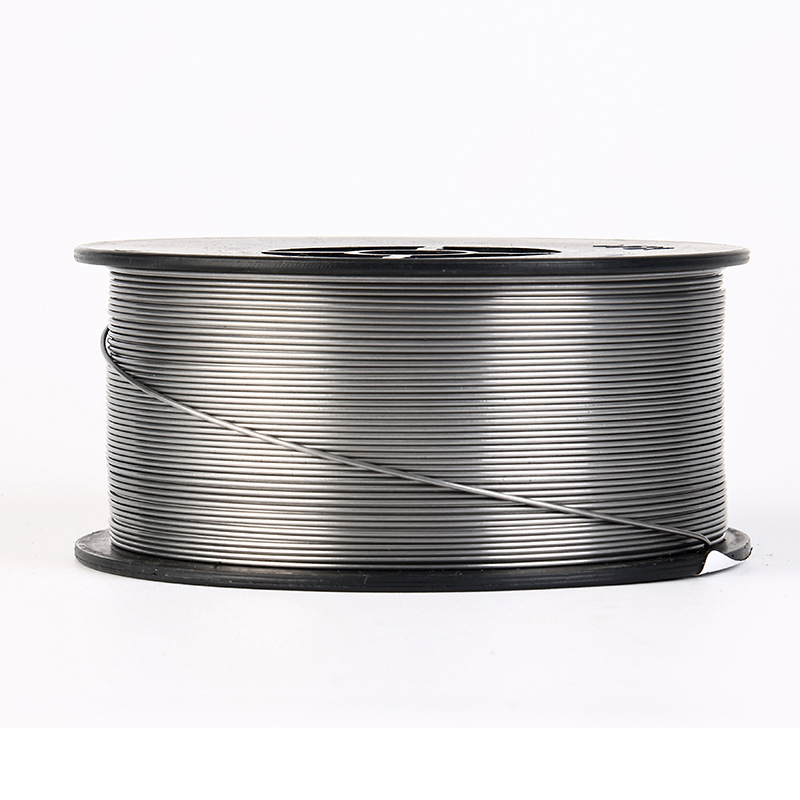
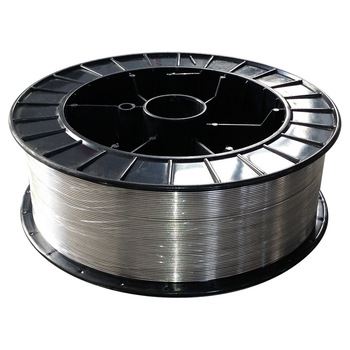
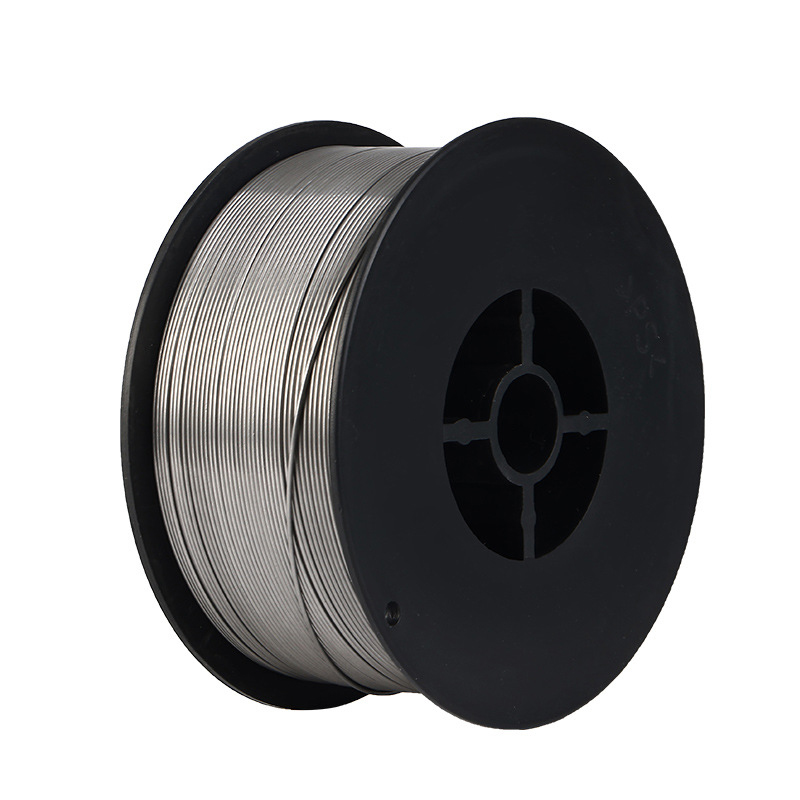
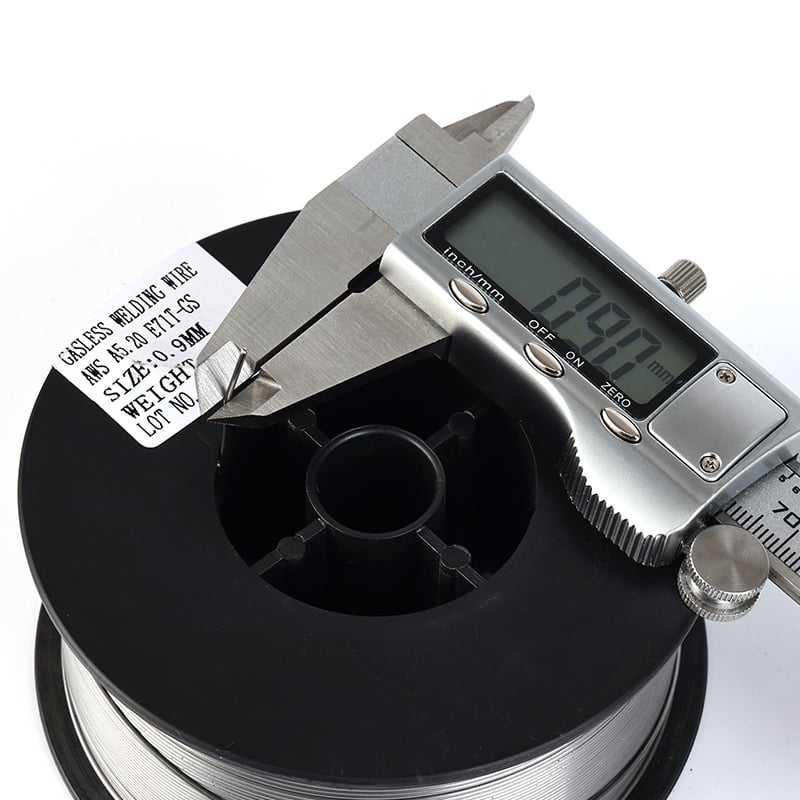
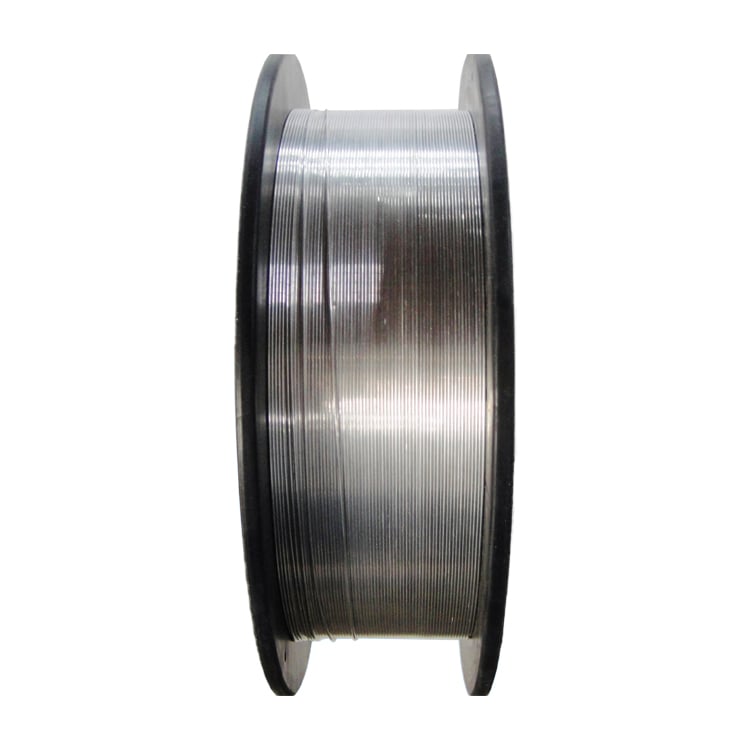
AWS A5.14 ERNiCu-7 Monel TIG Welding Wire (2.4mm) for Marine Propeller Shaft Cladding & Seawater Corrosion Protection
Premium ERNiCu-7 (Monel 60 / UNS N04060) TIG welding wire engineered for marine shaft corrosion-resistant cladding, offshore valve overlays, and dissimilar Monel-to-steel joining. Titanium/Manganese deoxidized for sound, crack-free GTAW welds in severe seawater environments.
- Overview
- Technical Specifications & Data Tables
- Product Application Scenarios
- FAQ
- Recommended Products
- Welding Monel 400 (UNS N04400) and Monel R-405 to themselves.
- Overlaying Monel cladding onto structural carbon steels and low-alloy steels.
- Joining Monel 400 to copper-nickel alloys (90/10 and 70/30) and stainless steels.
- Surfacing marine valve seats, heat exchanger tube sheets, and offshore platform pump components.
Product Overview
High-Deposition ERNiCu-7 Monel 60 GTAW Consumable for Severe Seawater Service
In offshore and marine fabrication, weld integrity on rotating components such as propeller shafts and rudder stocks dictates operational lifespan. ERNiCu-7 filler metal provides an impermeable, corrosion-resistant metallurgical barrier against marine pitting, crevice attack, and chloride-induced stress corrosion. Its balanced chemistry matches the thermal expansion characteristics of high-strength shaft steels while delivering ductile, crack-free buttering and cladding layers.
Engineered Chemistry: Titanium Deoxidation for Porosity-Free Weld Metal
Unlike standard nickel filler alloys, AWS A5.14 ERNiCu-7 contains controlled levels of Titanium (1.5–3.0%) and Aluminum (≤1.25%). During the GTAW/TIG arc process, these active elements function as potent deoxidizers and nitrogen scavengers, neutralizing atmospheric contamination and virtually eliminating pinholes and porosity in multi-pass overlay welds.
Metallurgical Compatibility for Monel Alloys and Dissimilar Metal Joining
ERNiCu-7 is engineered for both homogeneous joining and challenging dissimilar metal transitions:
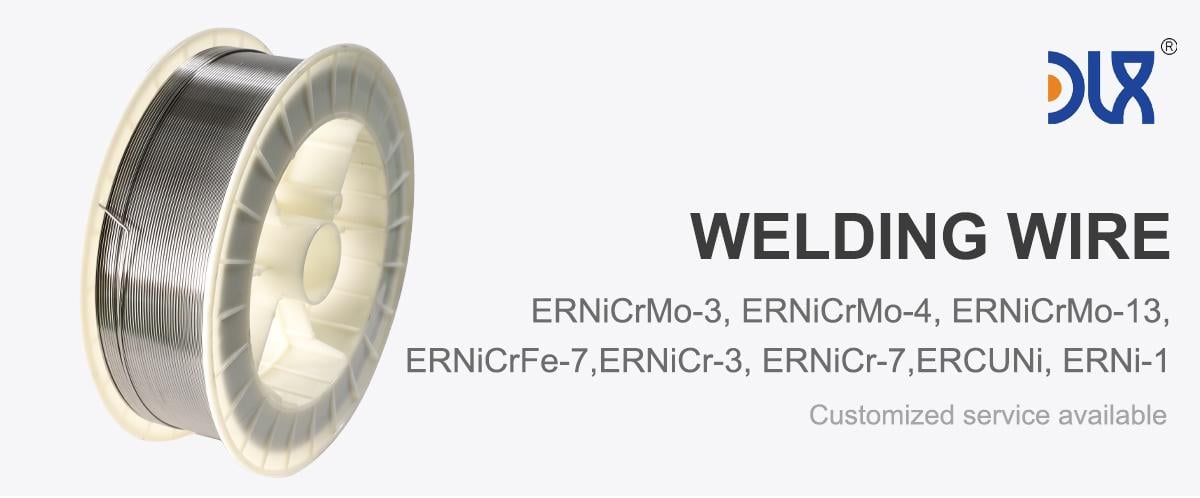
Performance Advantages of 2.4mm ERNiCu-7 Monel TIG Filler Rod
Superior Seawater and Cavitation Erosion Resistance
Offers unmatched resistance to high-velocity seawater, brackish water, and turbulent marine currents. Forms a tenacious, self-healing cuprous/nickel oxide film that resists biofouling, micro-galvanic corrosion, and marine impingement attack.
Stable GTAW Arc Characteristics and Clean Weld Bead Wetting
Precision surface drawing and automated degreasing ensure uniform wire feedability, stable arc ignition, smooth puddle fluidity, and minimal spatter. Produces uniform ripple appearance requiring minimal post-weld dressing.
High Ductility and Crack Resistance in Multi-Pass Cladding
Excellent elongation (≥30%) and notch toughness ensure high tolerance to thermal cycling, shaft rotational bending stresses, and heavy structural restraint without solidification cracking.
Full Traceability and Certification Compliance
Supplied with EN 10204 3.1 Mill Test Certificates (MTC) documenting exact chemical heats, mechanical tensile testing, and ferrite/porosity verification per AWS A5.14 and ASME Sec. IX requirements.
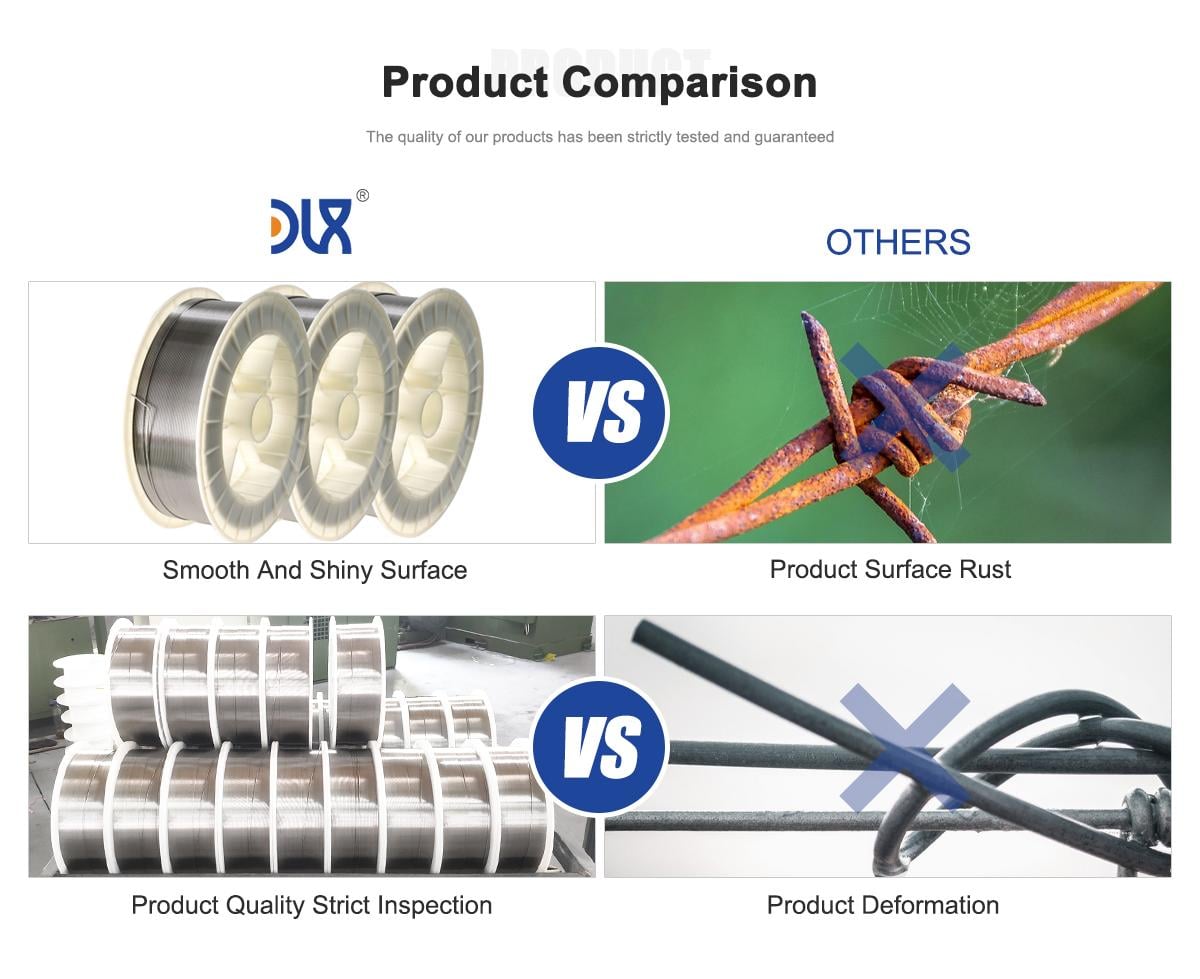
Chemical Composition (AWS A5.14 ERNiCu-7 / UNS N04060)
| Element | AWS A5.14 Standard (%) | Typical Certificate Value (%) |
|---|---|---|
| Nickel (Ni) + Co | 62.00 – 69.00 | 65.20 |
| Copper (Cu) | Remainder | 29.80 |
| Titanium (Ti) | 1.50 – 3.00 | 2.35 |
| Manganese (Mn) | ≤ 4.00 | 3.20 |
| Iron (Fe) | ≤ 2.50 | 1.10 |
| Silicon (Si) | ≤ 1.25 | 0.45 |
| Aluminum (Al) | ≤ 1.25 | 0.30 |
| Carbon (C) | ≤ 0.15 | 0.04 |
| Phosphorus (P) | ≤ 0.020 | 0.008 |
| Sulfur (S) | ≤ 0.015 | 0.003 |
Mechanical Properties of Undiluted Weld Metal
| Parameter | AWS A5.14 Minimum Requirement | Typical Room Temperature Value |
|---|---|---|
| Tensile Strength (Rm) | ≥ 480 MPa (70 ksi) | 530 – 580 MPa |
| Yield Strength (Rp0.2) | Not Specified | 280 – 330 MPa |
| Elongation (A5 / 4d) | ≥ 30% | 35% – 42% |
| Impact Toughness (Charpy V-Notch at 20°C) | Mandatory Test Available | ≥ 100 J |
| Hardness (As-Welded) | 140 – 170 HB | 150 HB |
| Melting Range | 1300 – 1350 °C | 1300 – 1350 °C |
| Density | 8.80 g/cm³ | 8.80 g/cm³ |
Standard Product Dimensions & Supply Condition
| Diameter (mm / inch) | Standard Length | Welding Process | Shielding Gas Recommendation | Packaging Type |
|---|---|---|---|---|
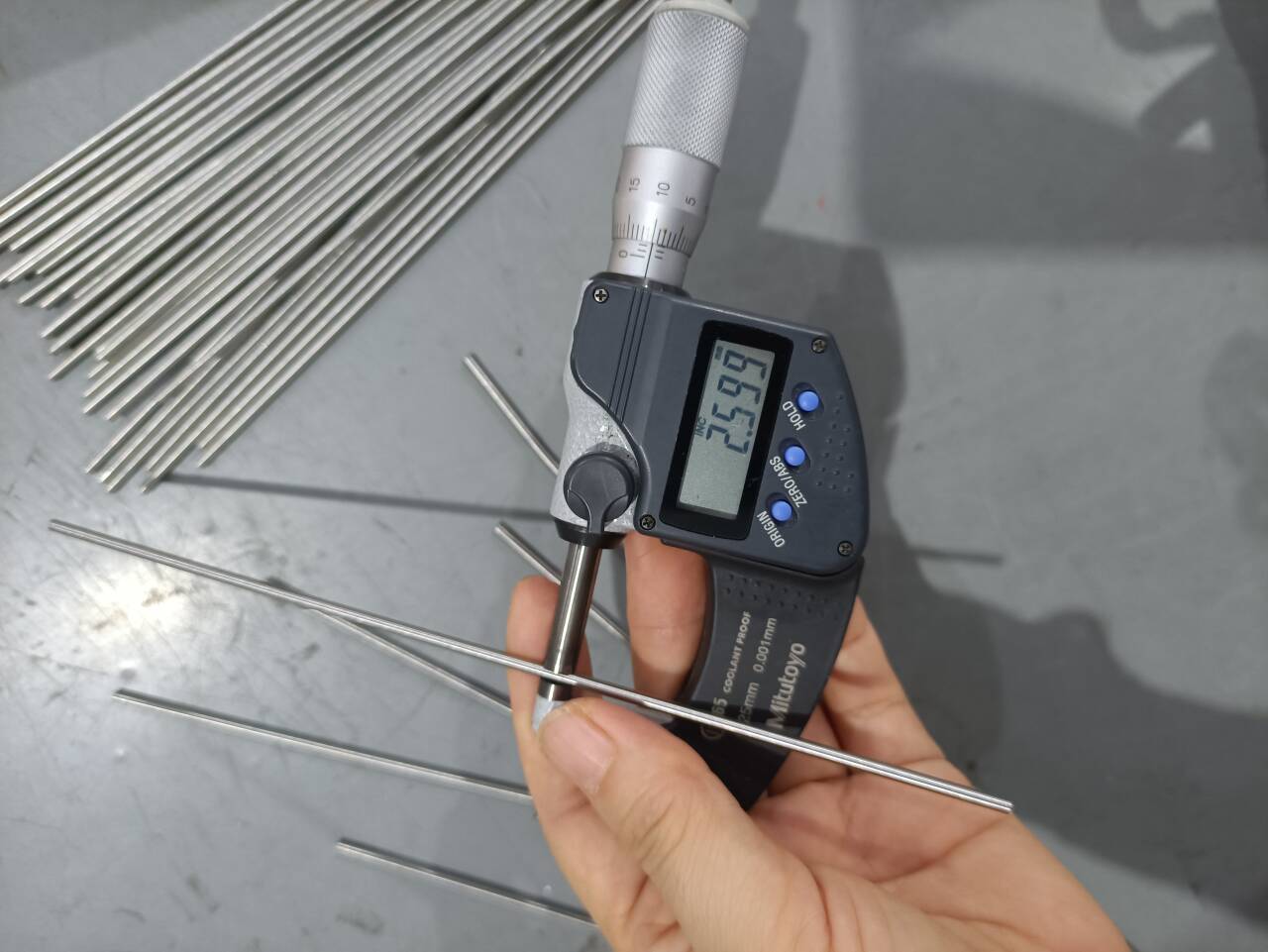
| 2.4 mm (3/32 in) | 1000 mm (36 in) / Custom | TIG (GTAW) | 100% High-Purity Argon (99.999%) / Ar+He | 5 kg Tube / 10 kg Carton / Wooden Box |
| Optional: 1.6 mm / 2.0 mm / 3.2 mm / 4.0 mm | 1000 mm (36 in) / Custom | TIG (GTAW) | 100% High-Purity Argon (99.999%) | 5 kg Tube / 10 kg Carton / Wooden Box |
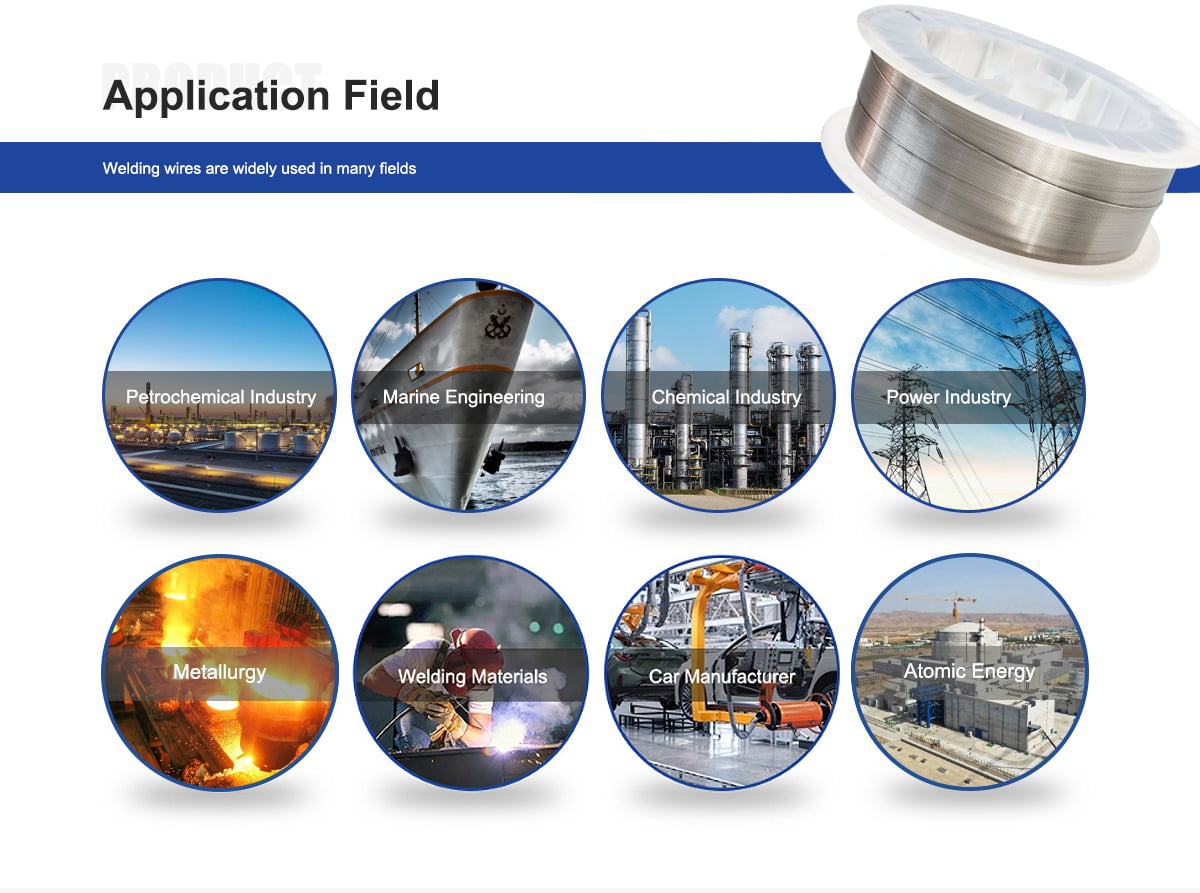
Industrial Applications for ERNiCu-7 Monel Overlay and Fabrication
Marine Propeller Shaft & Rudder Stock Cladding
Used for multi-pass buttering and overlay welding on carbon steel marine propulsion shafting, stern tube sleeves, and rudder pins to stop galvanic corrosion and mechanical wear in splash and submerged zones.
Seawater Pumps, Valves & Piping Systems
Protects high-wear fluid handling equipment in naval vessels, desalination plants, and offshore platforms, including pump impellers, casing rings, valve seats, and seawater intake manifolds.
Offshore Oil & Gas Splash Zone Components
Provides corrosion protection on riser clamp areas, marine riser joints, subsea fasteners, and heat exchanger tube-to-tubesheet joints exposed to turbulent brine.
Chemical & Petrochemical Processing Equipment
Ideal for fabricating and repairing hydrofluoric (HF) acid alkylation units, chlorinated solvent processing vessels, fatty acid evaporators, and marine chemical tanker cargo piping.
Frequently Asked Questions on AWS A5.14 ERNiCu-7 Monel TIG Wire
Q1: Why is ERNiCu-7 preferred over pure nickel or stainless filler wire for marine propeller shaft cladding?
A: ERNiCu-7 (Monel 60) matches both the high corrosion resistance of nickel-copper alloys and the thermal expansion profile of structural shaft steel. It prevents galvanic coupling and eliminates chloride stress corrosion cracking, which frequently causes catastrophic failure in standard austenitic stainless steel overlays.
Q2: How does ERNiCu-7 eliminate weld porosity during TIG (GTAW) welding?
A: ERNiCu-7 contains 1.5% to 3.0% Titanium along with Manganese. These elements act as active chemical deoxidizers in the molten puddle, capturing oxygen and nitrogen impurities and preventing gas porosity from forming in the solidifying weld bead.
Q3: What shielding gas and welding parameters are recommended for 2.4mm ERNiCu-7 wire?
A: 100% High-Purity Argon (≥99.999%) at a flow rate of 12–16 L/min is recommended. For deeper penetration on heavy steel shaft cladding, an Argon-Helium mix (75% Ar / 25% He) can be used. Direct Current Electrode Negative (DCEN) with 120–160 Amps is standard for 2.4mm rods. Maintain a short arc and clean interpass temperatures below 150°C.
Q4: Can ERNiCu-7 be used to weld Monel 400 to Carbon Steel (Dissimilar Welding)?
A: Yes. ERNiCu-7 is the standard filler metal for joining Monel 400 (UNS N04400) to carbon, low-alloy, and stainless steels. For buttering layers on carbon steel, controlling dilution is essential; apply the first layer with stringer beads and minimal heat input to limit iron pickup below 5%.
Q5: What is the MOQ, packaging, and sample policy for international buyers?
A: Our standard MOQ is 5 kg. We provide 0.5 kg free evaluation samples for qualified marine engineering contractors and welding test laboratories. Standard export packaging includes 5 kg moisture-proof rigid plastic tubes packed inside shock-absorbing export cartons and palletized wooden crates.