EN

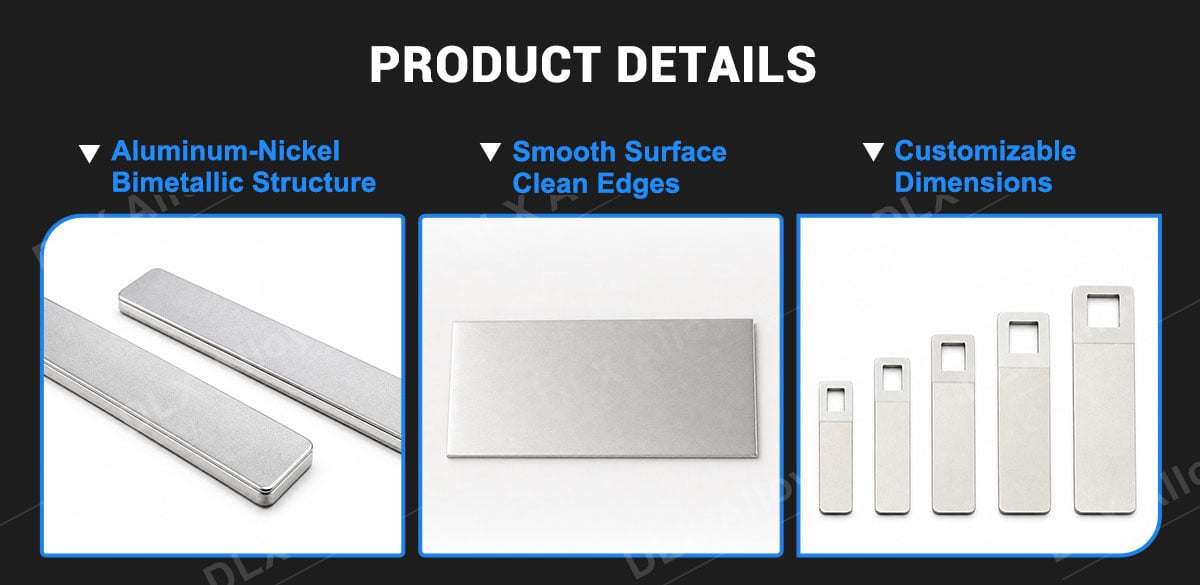
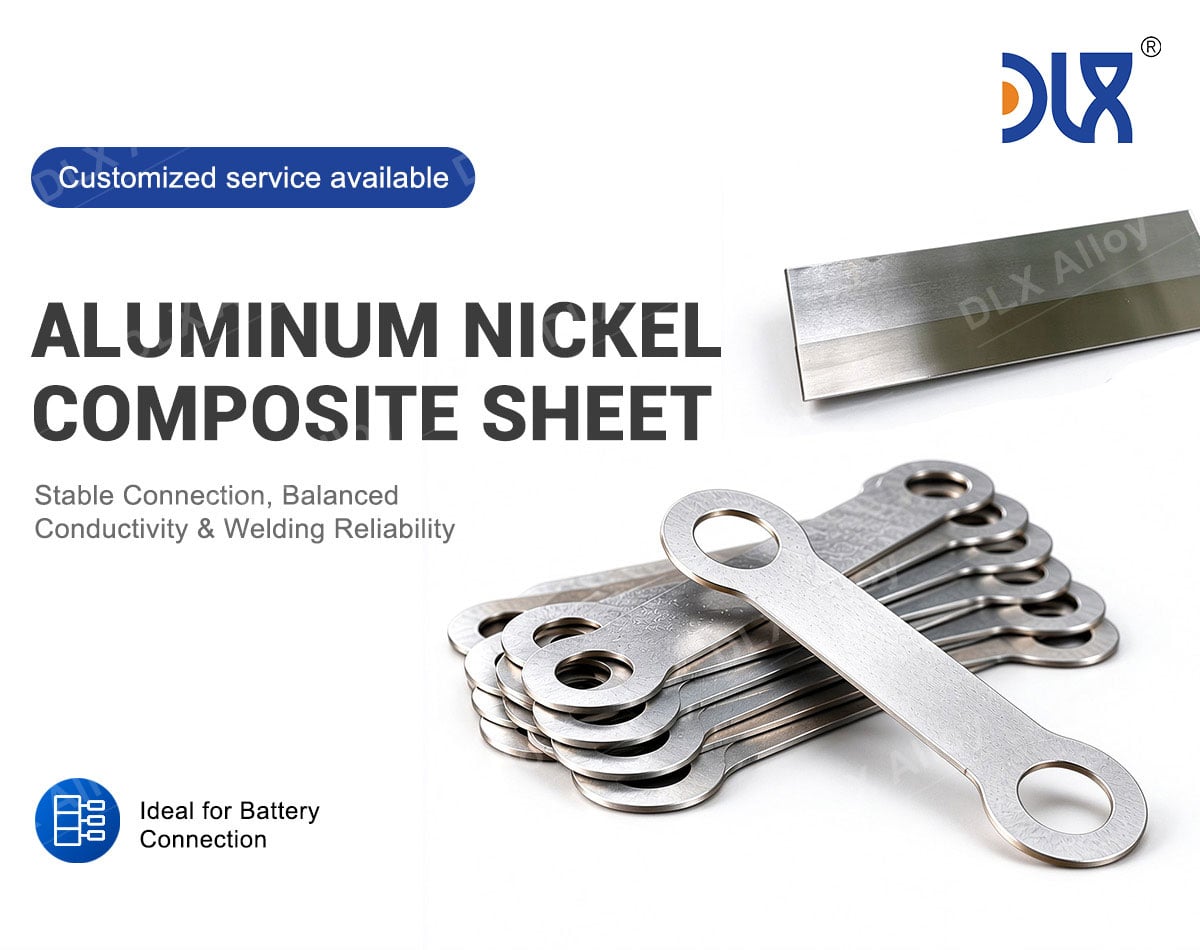
Durable Aluminum Nickel Bimetallic Sheet Al/Ni Custom Size For 18650 Battery Connectors
ISO 9001 certified manufacturer of custom Al/Ni bimetallic sheets for 18650 lithium battery connectors. Solid-phase clad bonding, ultra-low interface resistance, and precision stamping for zero-delamination tabs.
- Overview
- Specifications
- Features
- Applications
- About DLX
- FAQ
- Recommended Products
Product Overview
High-Reliability Al-Ni Clad Transition Strips for Lithium Battery Pack Interconnections
Connecting aluminum positive terminals to nickel or nickel-plated copper busbars has historically been a critical vulnerability in cylindrical battery assembly. Direct fusion welding of dissimilar metals generates brittle intermetallic phases ( / ), leading to micro-cracking, elevated internal resistance, and galvanic corrosion over thermal cycling.
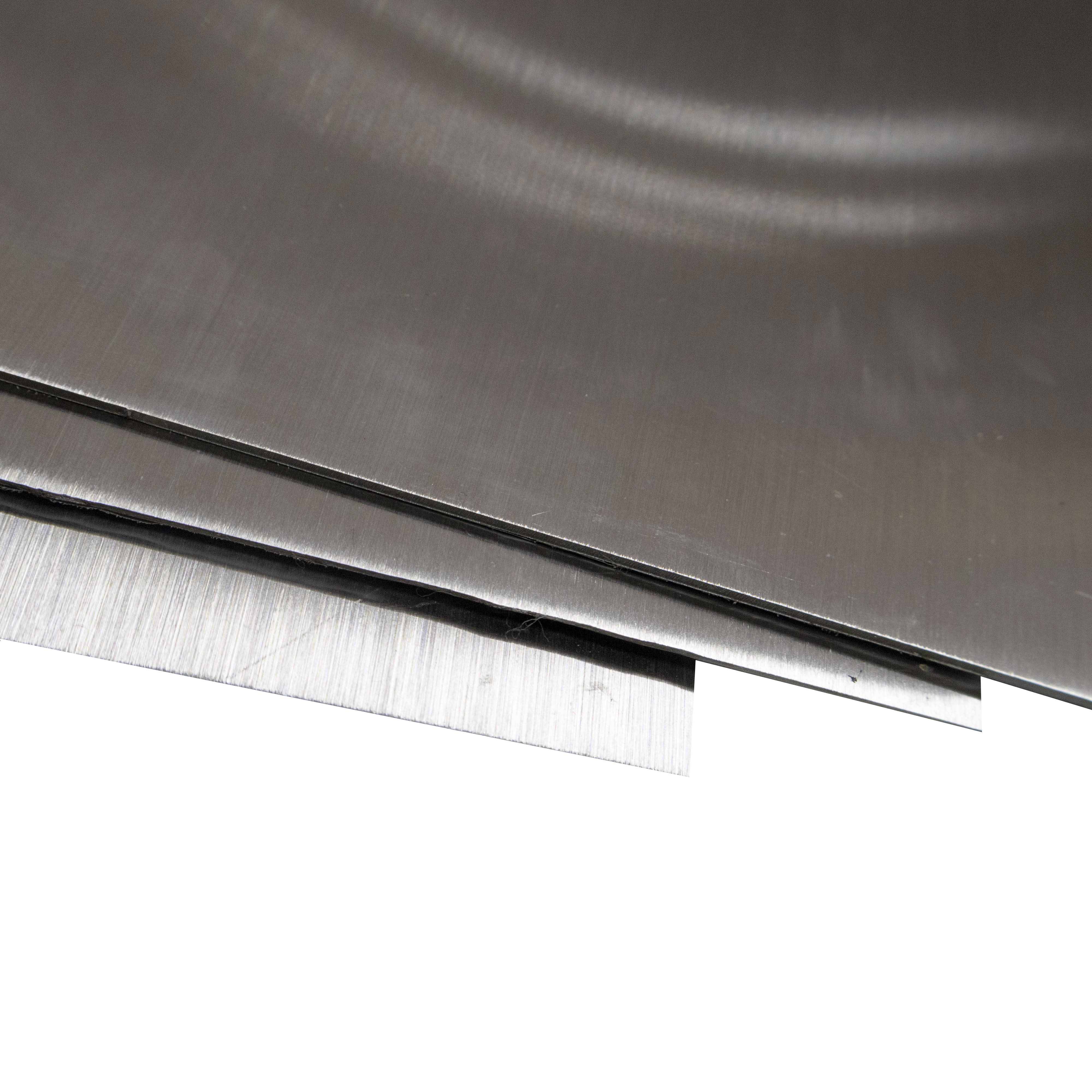
DLX Alloy's Aluminum Nickel Bimetallic Sheet solves this engineering bottleneck by creating a continuous, defect-free solid-phase metallurgical bond between pure aluminum and pure nickel before stamping. By utilizing this transition material, battery pack builders can weld Aluminum-to-Aluminum (ultrasonic/laser) on the battery positive terminal side, and Nickel-to-Nickel (resistance spot/laser) on the busbar side, completely isolating dissimilar metal welding from the live assembly line.
Technical Specifications
Engineering Specifications and Dimensional Tolerances for Al/Ni Bimetal Sheets
| Technical Parameter | Standard Range | Custom Capability | Test Method / Reference |
|---|---|---|---|
| Base Material (Aluminum) | 1050 / 1060 / 1100 Pure Al | Annealed (O) / Half-Hard (H14) | Spectral Analysis |
| Clad Layer (Nickel) | Ni200 / N6 ( Purity) | Annealed (M) / As-rolled (Y) | Chemical Assay |
| Clad Ratio (Thickness %) | 50% Al / 50% Ni, 70% Al / 30% Ni | 20% to 80% Customizable | Optical Metallography |
| Total Thickness | Tolerance | ||
| Slit Width / Piece Size | Custom Stamped to CAD Drawing | Tolerance | |
| Bonding Interface Strength | (180° Peel) | Exceeds Al Tensile Strength | GB/T Standard Peel Test |
| Electrical Conductivity | (Composite) | Optimized per Clad Ratio | Eddy Current Testing |
| Bending Performance | 180° Bending without Delamination | Radius | Visual Inspection at |
Key Features of Defect-Free Al-Ni Bimetallic Battery Tabs
-
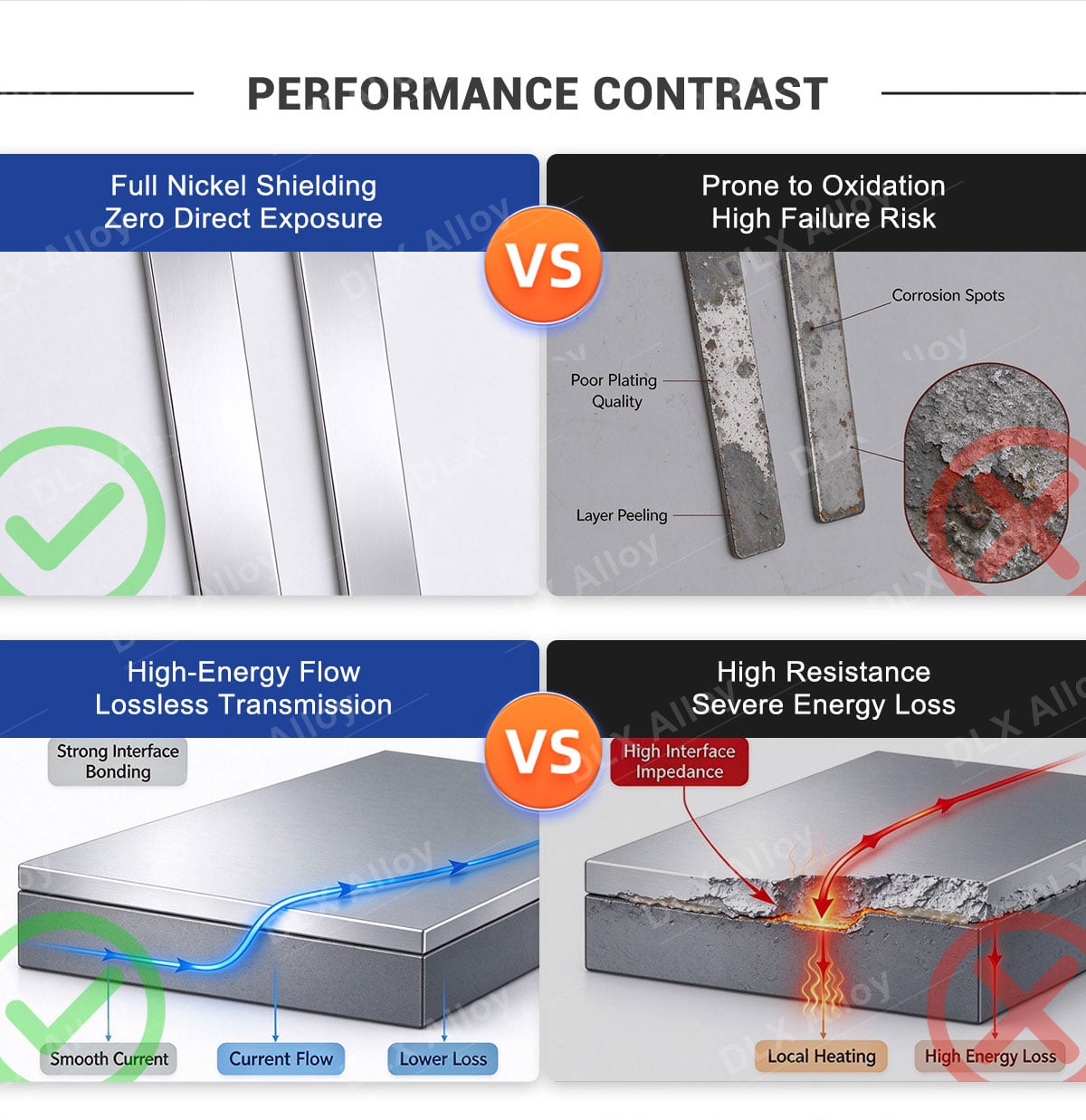
Atomic Metallurgical Fusion (Zero Delamination Risk): Formed through high-pressure cold rolling and vacuum diffusion annealing, ensuring a non-porous, inseparable joint interface that withstands continuous high-frequency vibration and deep discharge cycles.
-
Minimal Contact Resistance & Reduced Thermal Load: The direct metallurgical transition achieves an interface resistance below , effectively preventing localized heat accumulation at connection points during fast charging ().
-
Exceptional Stamping and Deep-Drawing Ductility: Balanced temper matching between the aluminum core and nickel cladding allows burr-free punching, complex bending, and custom connector tab geometry without delamination or edge cracking.
-
Optimized for High-Speed Automated Welding: Compatible with automated spot welders, fiber laser welding machines, and ultrasonic wire/tab bonding equipment, achieving consistent weld nugget quality and zero false-welding rates.
-
Enhanced Anti-Galvanic Corrosion Barrier: The seamless solid-state interface prevents electrolyte penetration and ambient moisture ingress, eliminating electrochemical corrosion pathways in harsh automotive and industrial environments.
Strategic Applications in 18650/21700/Prismatic Battery Modules
-
18650 & 21700 Cylindrical Battery Tabs: Serves as the positive terminal transition tab connecting internal aluminum current collectors to external nickel-plated busbars.
-
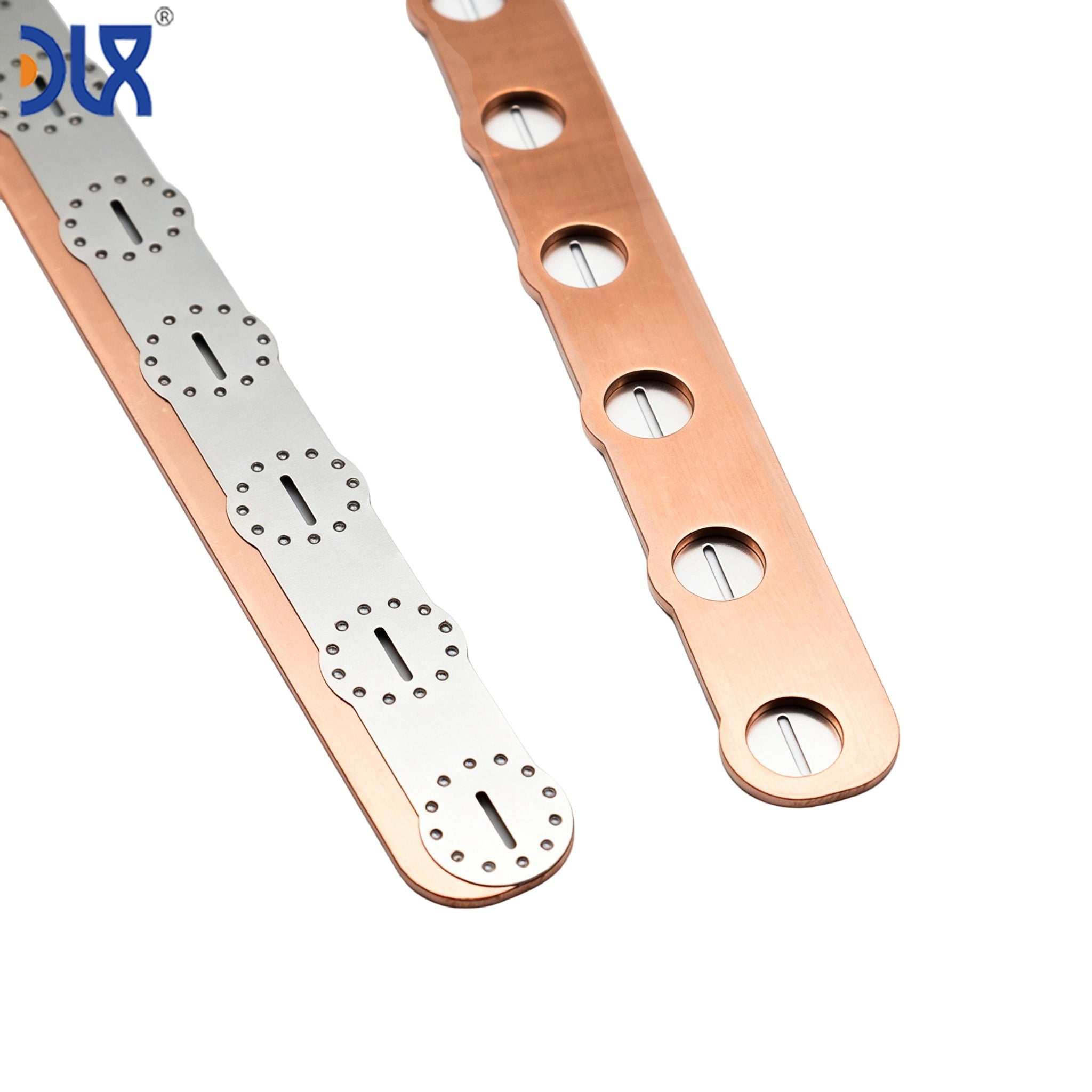
Prismatic & Pouch Cell Cap Connectors: Acts as an intermediate bridge plate between aluminum cover poles and nickel/copper monitoring wiring harnesses (BMS connections).
-
Electric Vehicle (EV) & ESS Battery Packs: High-current busbar transition sheets for energy storage systems and power tool packs requiring high thermal dissipation.
-
Smart Electronics & Medical Battery Hardware: Micro-sized precision stamped Al/Ni contact pieces for portable electronics and medical monitoring equipment.

Why Source Al-Ni Clad Materials from DLX Alloy
-
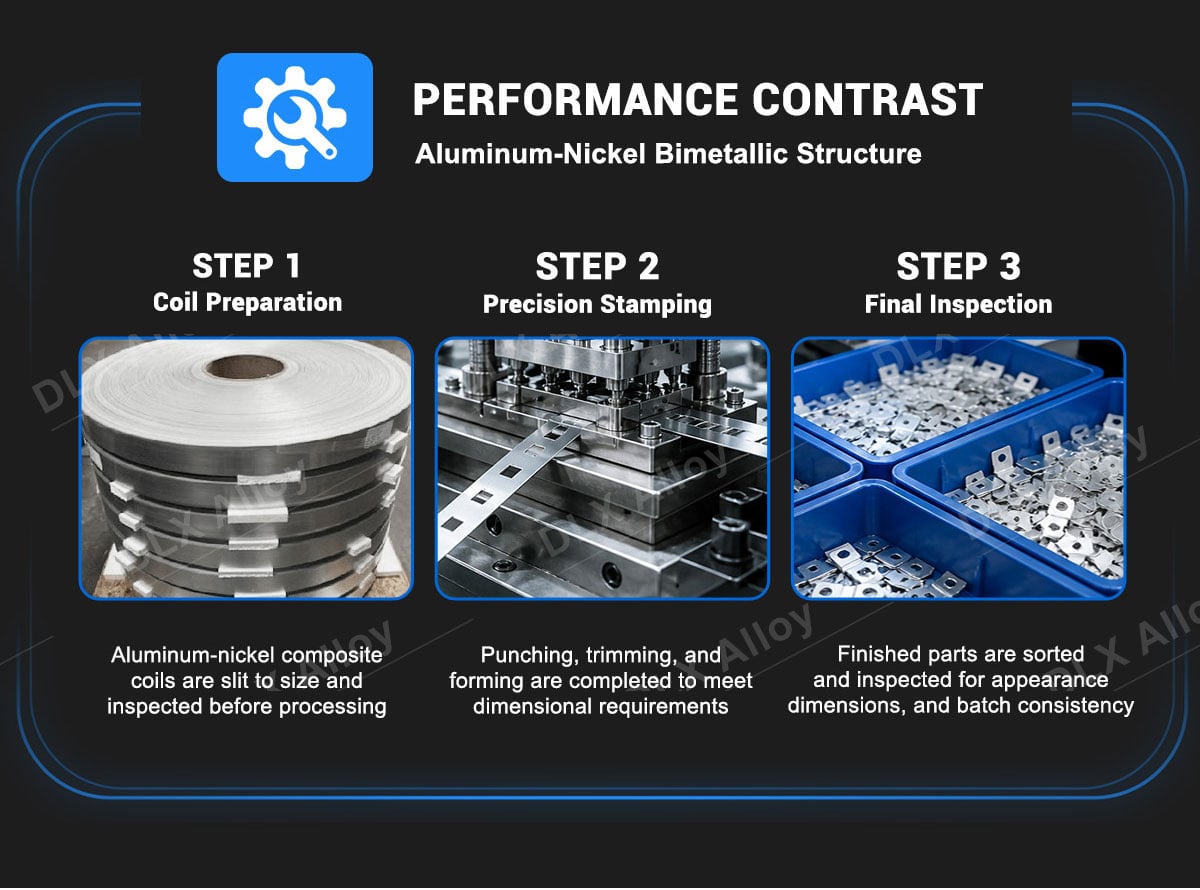
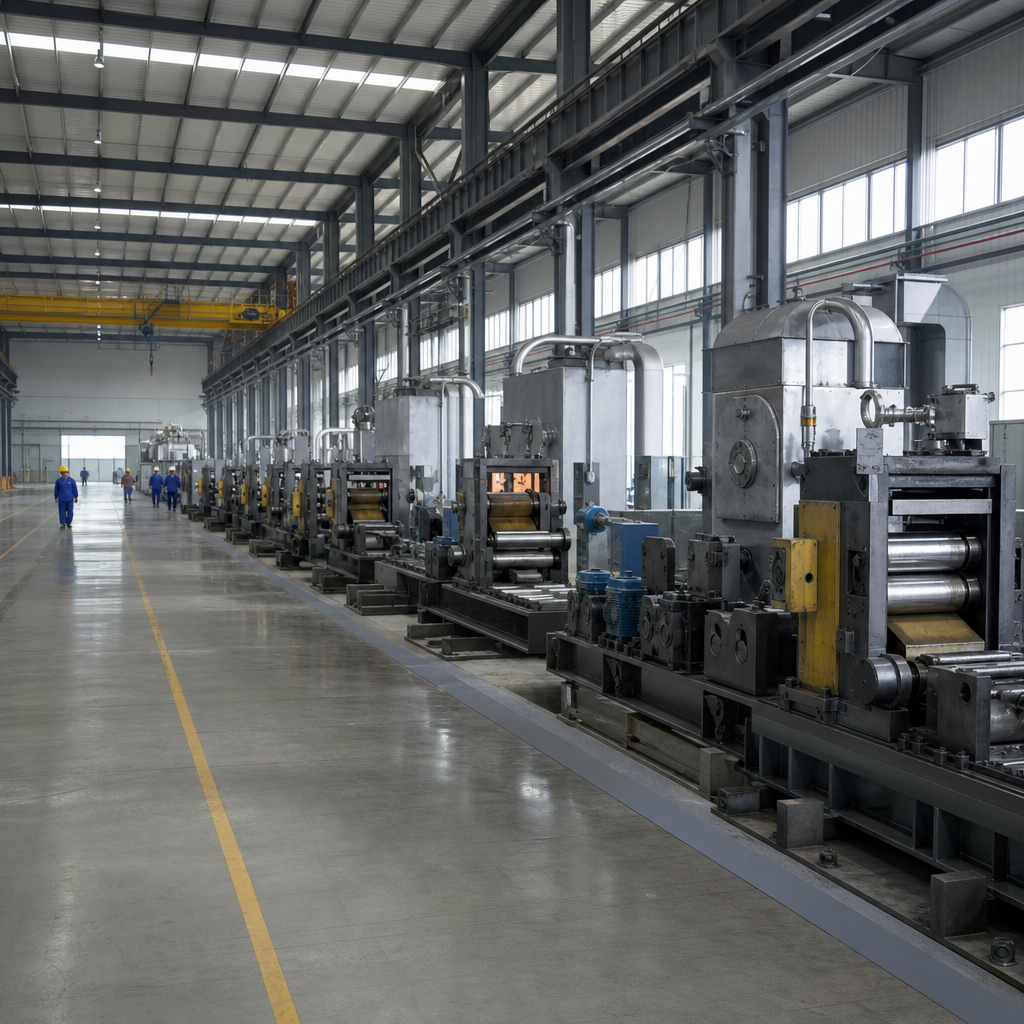
Integrated Cladding & Precision Stamping Lines: We operate end-to-end processing from primary clad rolling and slit annealing to CNC precision high-speed stamping, ensuring tight tolerances () and flat, burr-free edges.
-
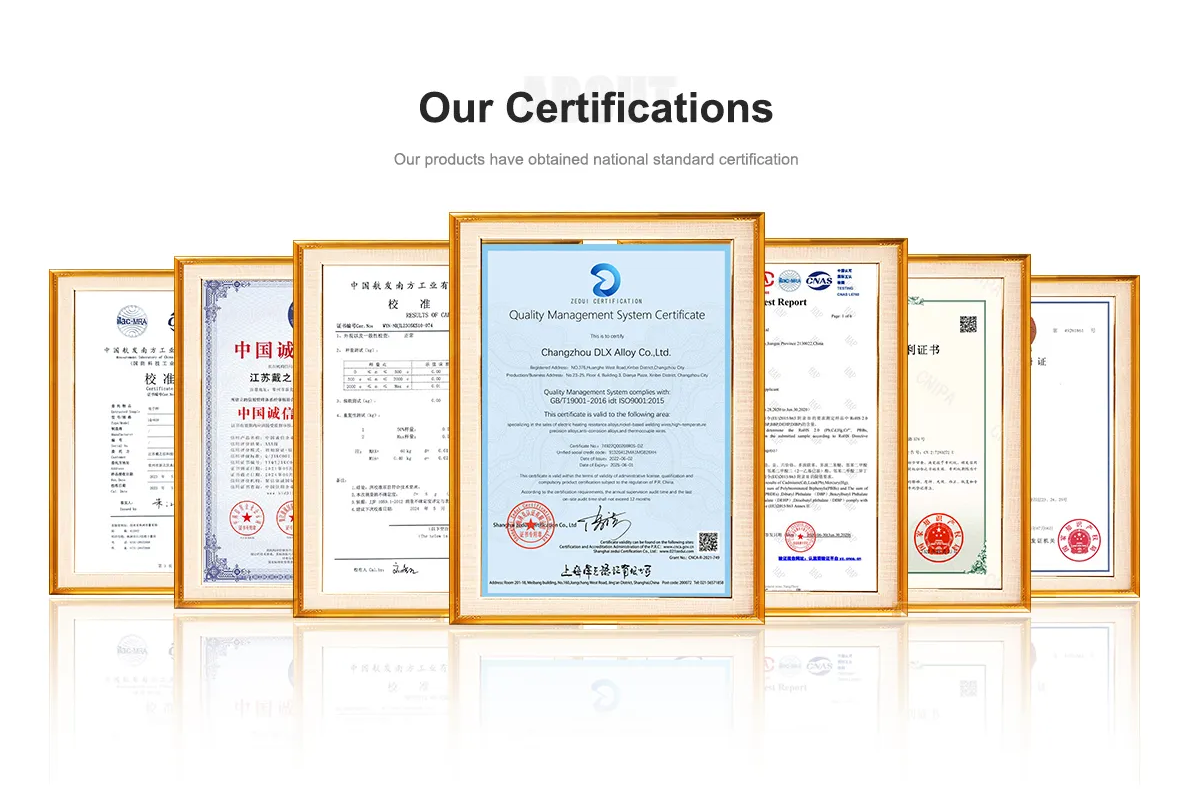
Strict Quality Assurance & 100% Batch Inspection: Certified under ISO 9001 quality systems. Every coil undergoes peel tests, interface resistivity measurements, and metallographic bonding verification with full Mill Test Certificates (MTC).
-
Flexible Prototyping & Low MOQ Support: Rapid tooling turnaround for custom 18650/21700 connector drawings with trial order support (MOQ as low as 5 kg for standard stock widths).
-
Deep Application Engineering Support: Over two decades of specialized expertise in non-ferrous and bimetal transition alloys, assisting global battery engineers with material temper selection and welding parameter matching.
Frequently Asked Questions on Aluminum Nickel Bimetallic Sheets
Q1: Why is an Al-Ni bimetallic sheet superior to direct aluminum-to-nickel welding in 18650 packs?
A: Direct fusion welding of aluminum and nickel creates brittle intermetallic compounds () that cause high electrical resistance, hot spots, and brittle fracture under vibration. DLX's solid-phase clad sheet eliminates direct melting between dissimilar metals during pack assembly, allowing engineers to weld Al-to-Al and Ni-to-Ni independently with maximum mechanical and electrical integrity.
Q2: Which side of the Al/Ni tab should be welded to the battery positive terminal?
A: The Aluminum (Al) layer is positioned against the aluminum positive pole or cap of the 18650 cell (welded via ultrasonic or laser welding), while the Nickel (Ni) layer faces upward to connect with the external nickel strip or busbar (welded via standard resistance spot or laser welding).
Q3: Can DLX provide pre-stamped custom Al-Ni connector shapes based on CAD drawings?
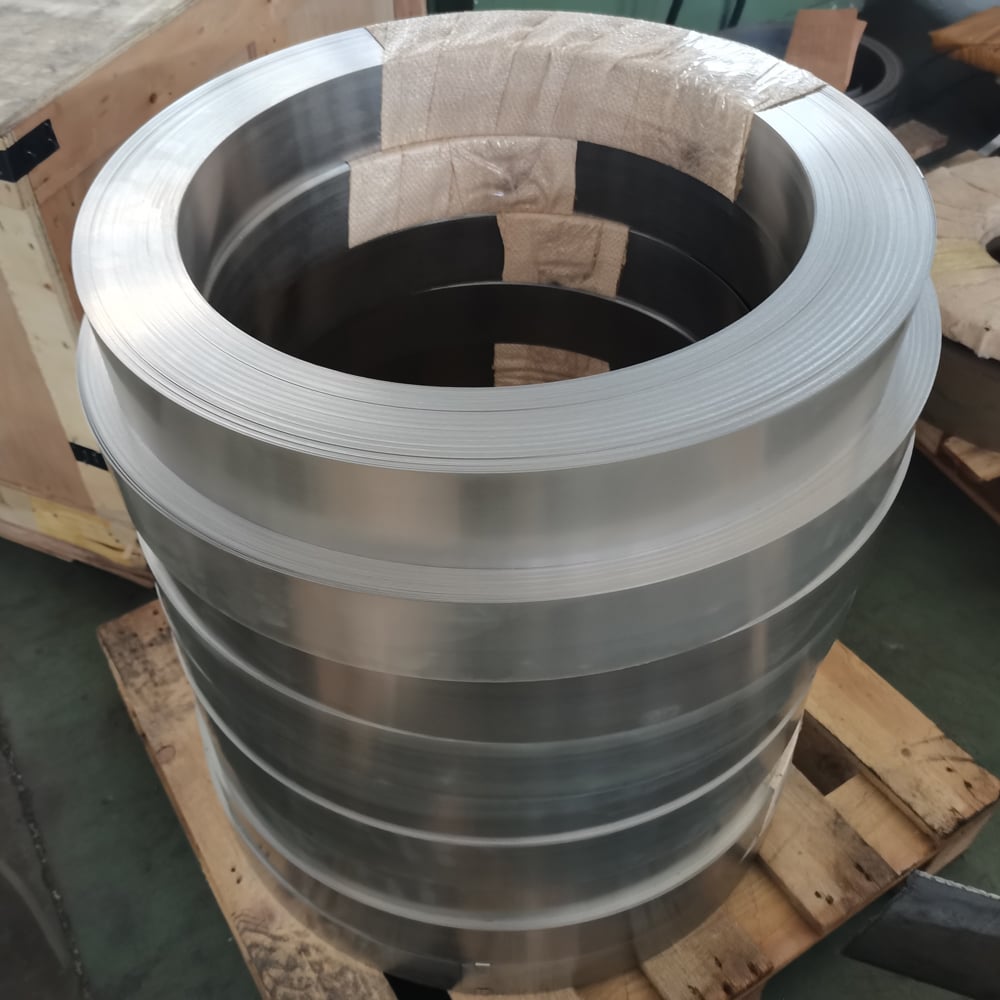
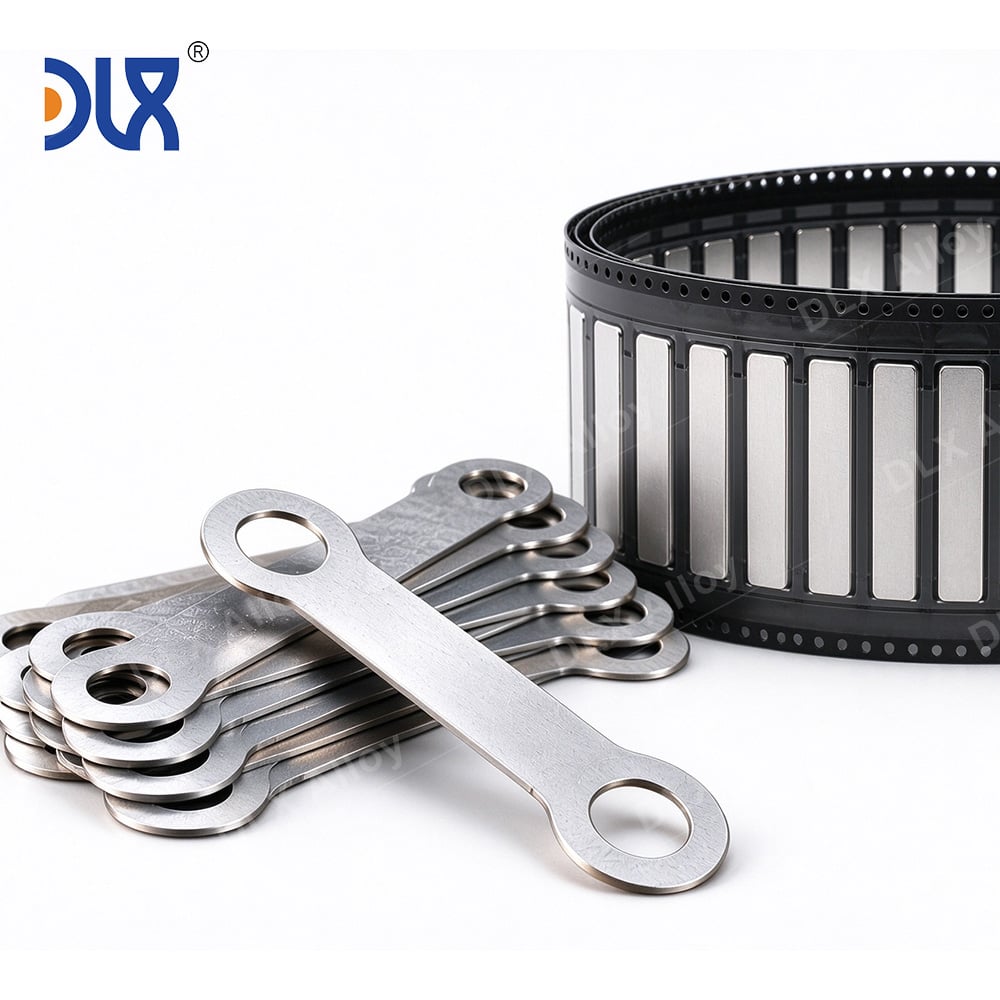
A: Yes. In addition to continuous slit coils ( width), we provide complete precision stamping services to fabricate custom tab shapes, slotted connectors, and multi-pin solder lugs tailored to your battery module configuration.
Q4: How do you verify the bonding strength and prevent interface delamination?
A: Each production lot is evaluated using standard mechanical peel testing. A qualified metallurgical bond ensures that failure occurs only through ductile tearing of the parent aluminum matrix, with zero separation along the Al-Ni metallurgical interface.
Q5: What standard thickness ratios and tempers are available?
A: The most common thickness ratio is (50% Al / 50% Ni) or (approx. 65% Al / 35% Ni), with total thicknesses ranging from to . We supply fully annealed (O-temper) materials for deep forming or half-hard tempers for structural rigidity.