EN

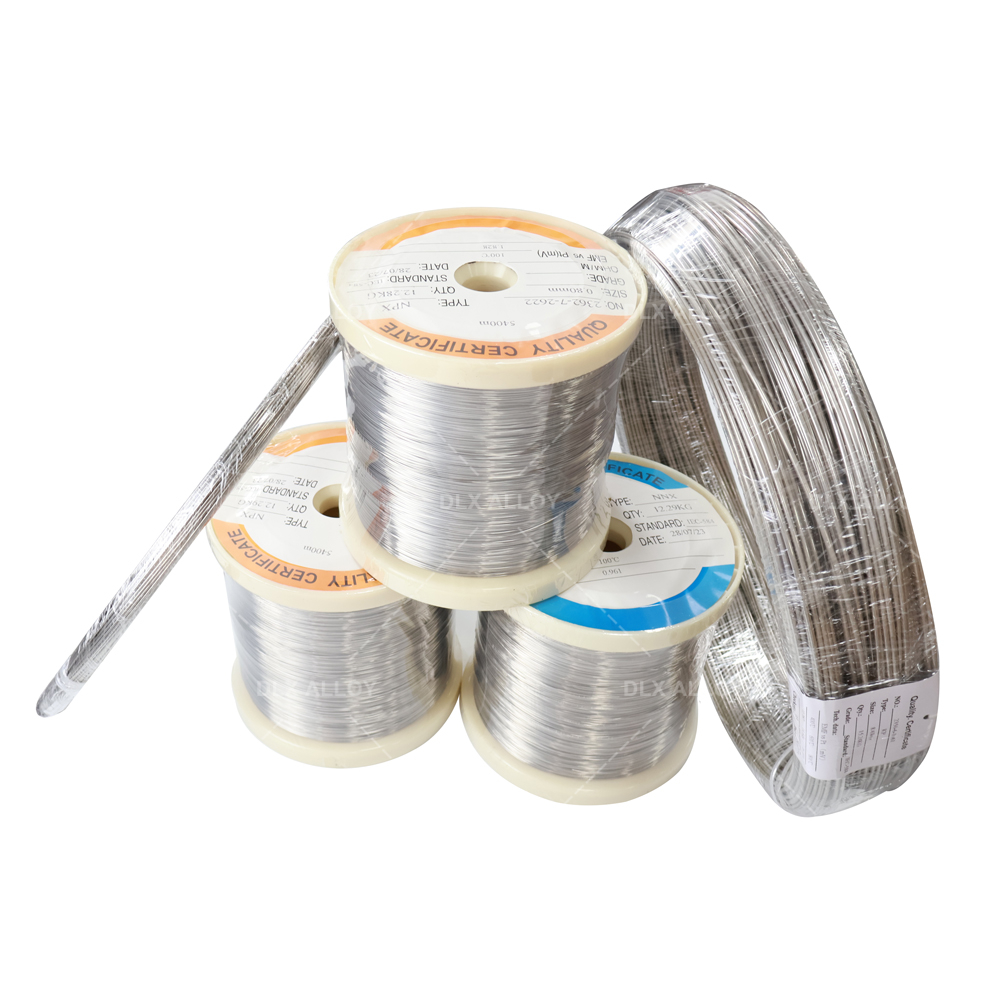
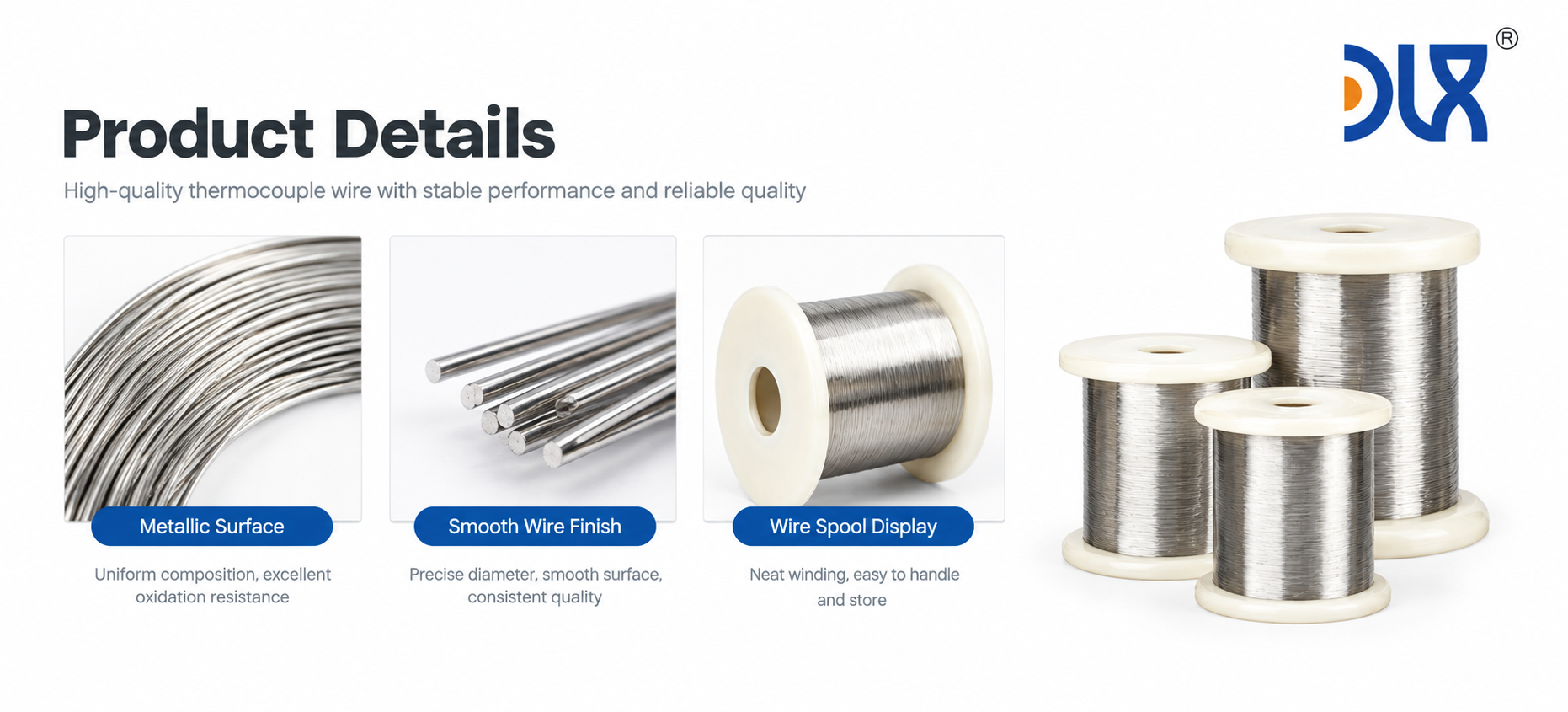
Precision High Temp Type B Thermocouple Wire 0.3mm for Ceramic Kilns
Engineered for extreme thermal profiling in advanced ceramic kilns, our 0.3mm Type B thermocouple wire (PtRh30/PtRh6) provides ultra-low EMF drift, exceptional oxidation resistance, and reliable continuous operation up to 1700°C.
- Overview
- Specifications
- Features
- Applications
- Why-Us
- FAQ
- Recommended Products
Product Overview: Type B Thermocouple Wire 0.3mm
Engineered for Advanced Technical Ceramic Sintering
In high-performance technical ceramic manufacturing—including alumina, zirconia, and silicon nitride production—precise thermal profiling is critical to achieving high structural density and eliminating micro-cracking. Type B thermocouple wire 0.3mm addresses these demanding thermal conditions by utilizing high-rhodium noble metal alloys, ensuring stable thermoelectric output and near-zero EMF degradation under prolonged exposure to extreme temperatures.
Metallurgical Purity and Precision Wire Drawing
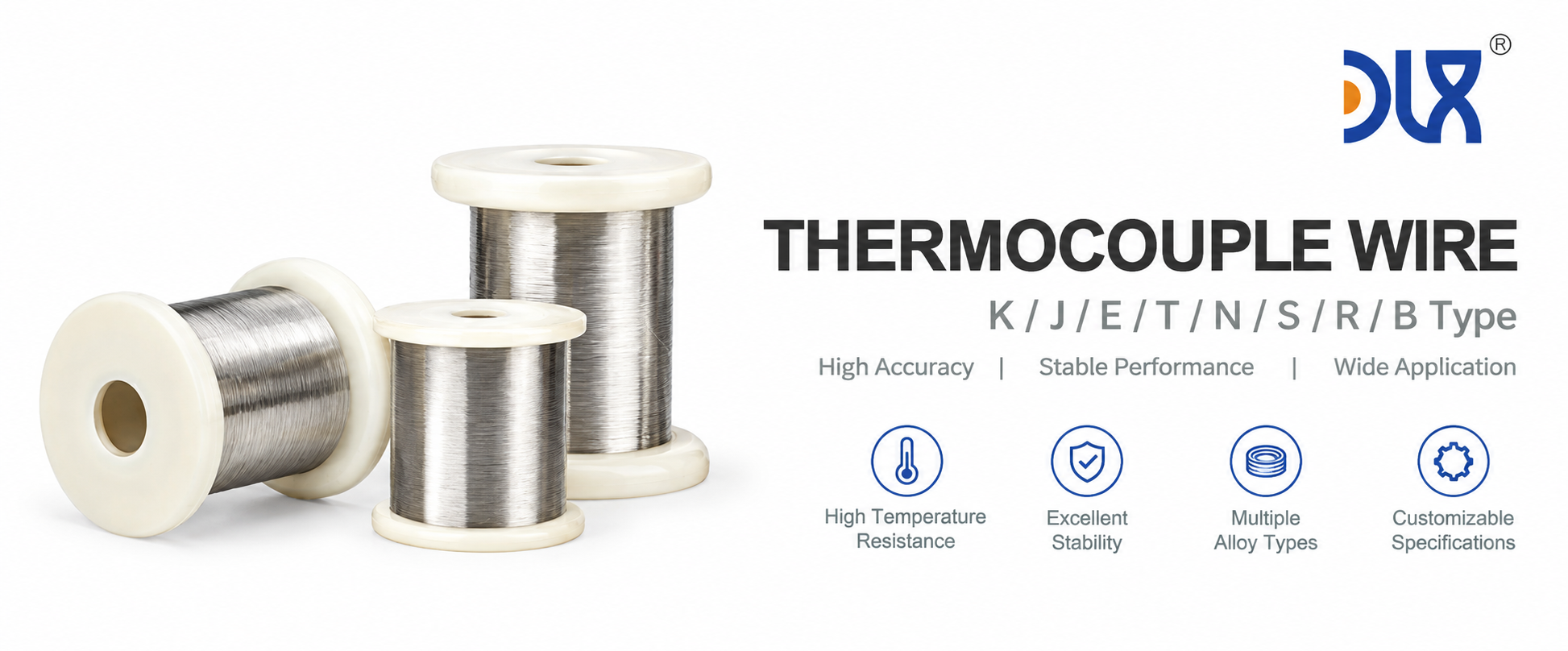
Manufactured through vacuum induction melting of high-purity precious metals followed by diamond-die multi-pass micro-drawing, our Type B thermocouple wire 0.3mm maintains an ultra-clean crystalline grain structure and homogeneous rhodium distribution. Strict atmosphere-controlled annealing ensures uniform elongation, mirror-bright surface quality, and seamless insertion into multi-bore ceramic insulation tubes without surface abrasion.
Technical Specifications and Parameter Matrix
| Parameter | Positive Leg (BP) | Negative Leg (BN) | Combined Sensor System |
|---|---|---|---|
| Nominal Alloy Composition | Platinum 70%, Rhodium 30% (PtRh30) | Platinum 94%, Rhodium 6% (PtRh6) | High-Rhodium Noble Metal Pair |
| Precious Metal Purity | ≥ 99.99% Ultra-High Purity | ≥ 99.99% Ultra-High Purity | Vacuum Induction Refined |
| Nominal Wire Diameter | 0.30 mm (0.0118 in) | 0.30 mm (0.0118 in) | Diameter Tolerance: ±0.005 mm |
| Continuous Operating Temperature | Up to 1700°C (3092°F) | Up to 1700°C (3092°F) | Continuous Kiln Duty |
| Maximum Peak Temperature | Up to 1800°C (3272°F) | Up to 1800°C (3272°F) | Short-Term Thermal Excursions |
| Density | 17.50 g/cm³ | 20.60 g/cm³ | High Mass Density |
| Melting Point | ~ 1920°C | ~ 1820°C | High-Refractory Noble Alloy |
| Electrical Resistivity (20°C) | ~ 0.19 µΩ·m | ~ 0.17 µΩ·m | Stable Resistance Matrix |
| Delivery Temper | Bright Annealed / Fully Homogenized | Bright Annealed / Fully Homogenized | Spool or Matched Pair Coils |
| Thermal EMF Stability | Drift < 0.25% per 1,000 hrs at 1600°C | Drift < 0.25% per 1,000 hrs at 1600°C | Ultra-Low Calibration Shift |
Key Features of Type B Thermocouple Wire 0.3mm
Thermal EMF Stability and Minimal Drift at 1700°C
The balanced PtRh30 and PtRh6 alloy chemistry suppresses grain coarsening and intergranular embrittlement at elevated temperatures. This microstructural resilience guarantees consistent millivolt output across multi-zone kiln heating cycles, reducing frequent recalibration downtimes.
High-Purity Metallurgy and Oxidation Resistance
Refined with ≥99.99% purity base metals, our 0.3mm Type B thermocouple wire prevents trace element contamination from iron, silicon, or lead. It demonstrates superior chemical inertness in oxidizing and neutral kiln atmospheres without protective sheath breakdown.
Micro-Diameter Precision and Surface Integrity
Drawn through micro-tolerance diamond dies and bright-annealed in a reducing atmosphere, the wire features an ultra-smooth, scratch-free surface with tight dimensional tolerance (±0.005mm). This prevents snagging inside high-purity alumina (Al₂O₃) protective sheaths and ensures reliable electrical insulation.
Matched EMF Pairing and Calibration Consistency
Positive and negative legs are calibrated as paired master lots against international temperature scales. Each production run guarantees uniform thermoelectric characteristics from the spool head to the tail, ensuring multi-point furnace measurement uniformity.
Industrial Applications
Advanced Ceramic Sintering Kilns
Serves as the primary high-temperature sensing element in continuous tunnel kilns, shuttle kilns, and roller hearth furnaces firing structural ceramics, electronic substrates, bioceramics, and spark plug insulators.
High-Temperature Vacuum and Atmosphere Furnaces
Applied in vacuum sintering furnaces, hot isostatic pressing (HIP) chambers, and molybdenum/tungsten heating elements where high operating temperatures require non-degrading sensor wires.
Glass Melting and Refractory Manufacturing
Provides reliable thermal feedback in glass forehearths, feeder bowls, and refractory test furnaces where atmospheric corrosion and thermal shock resist standard base-metal probes.
Semiconductor Crystal Growth and RTP Systems
Used in single-crystal silicon pulling furnaces, silicon carbide (SiC) sublimation growth chambers, and rapid thermal processing units requiring ultra-pure, non-contaminating temperature monitoring.
Why Choose DLX for Precision Thermocouple Wires
Full-Chain Precious Metal Refining and Wire Drawing Capability
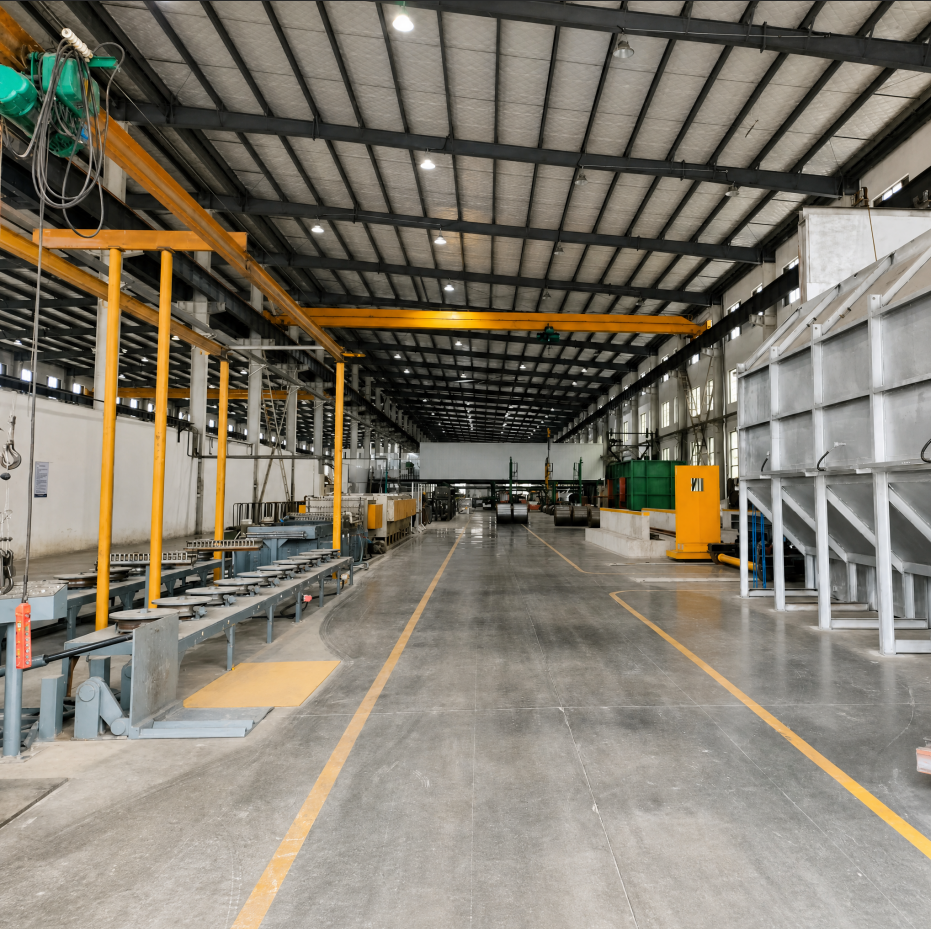
DLX operates integrated manufacturing lines from vacuum precious metal refining and precision micro-alloying to clean-room wire drawing and controlled-atmosphere annealing. This full-process oversight guarantees ultra-high purity and batch-to-batch EMF consistency.
Advanced Calibration Laboratories and Traceable Test Reports
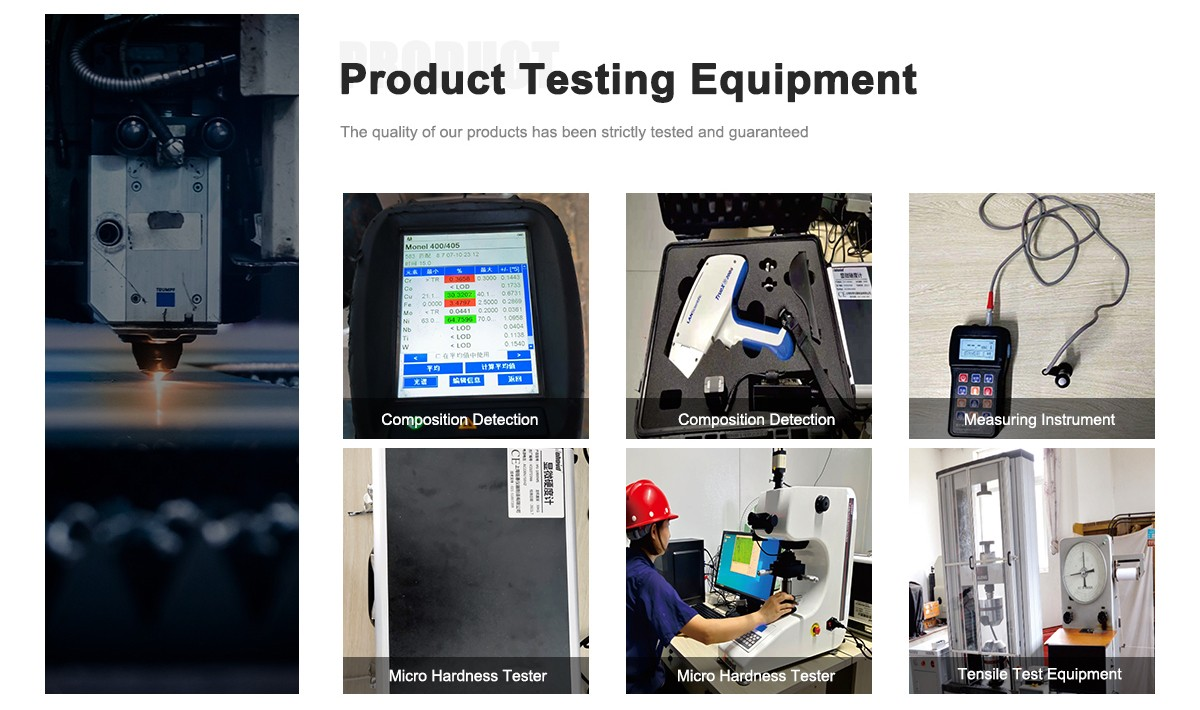
Equipped with high-precision optical pyrometers and multi-point calibration furnaces. Every lot of Type B thermocouple wire undergoes rigorous thermoelectric output verification, micro-hardness mapping, and surface defect inspection.
Robust Monthly Capacity and Flexible Order Execution
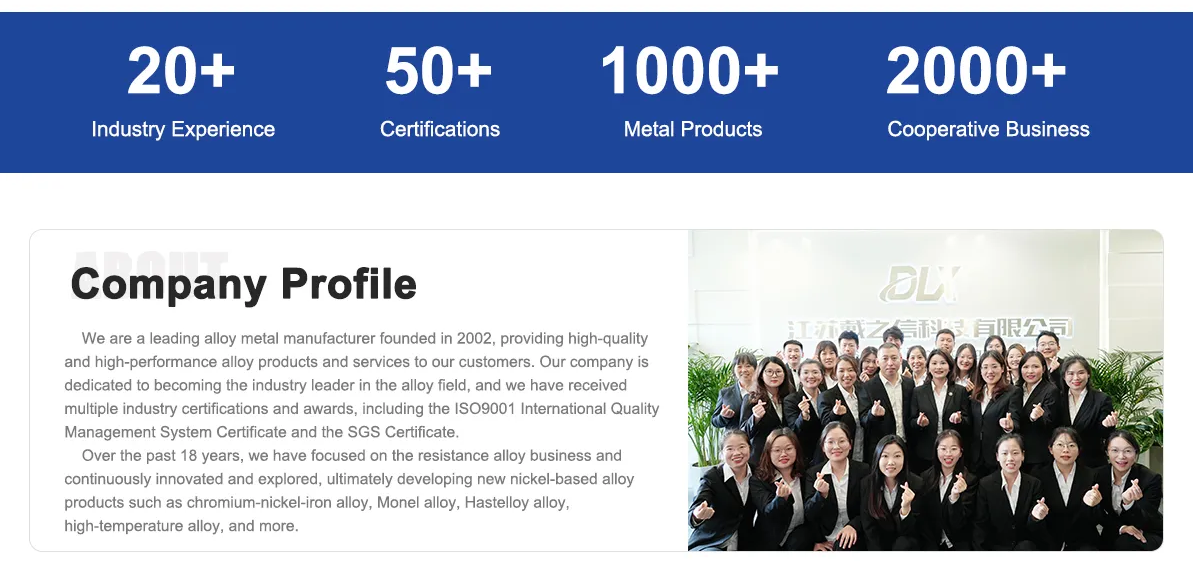
Backed by an integrated alloy production capacity of 1,200 tons per month across high-performance alloy and specialty metal divisions, DLX maintains dynamic minimum order quantities (MOQ) for custom spooling, prototype testing, and large-scale continuous industrial contracts.
Secure Anti-Deformation Packaging for Global Delivery
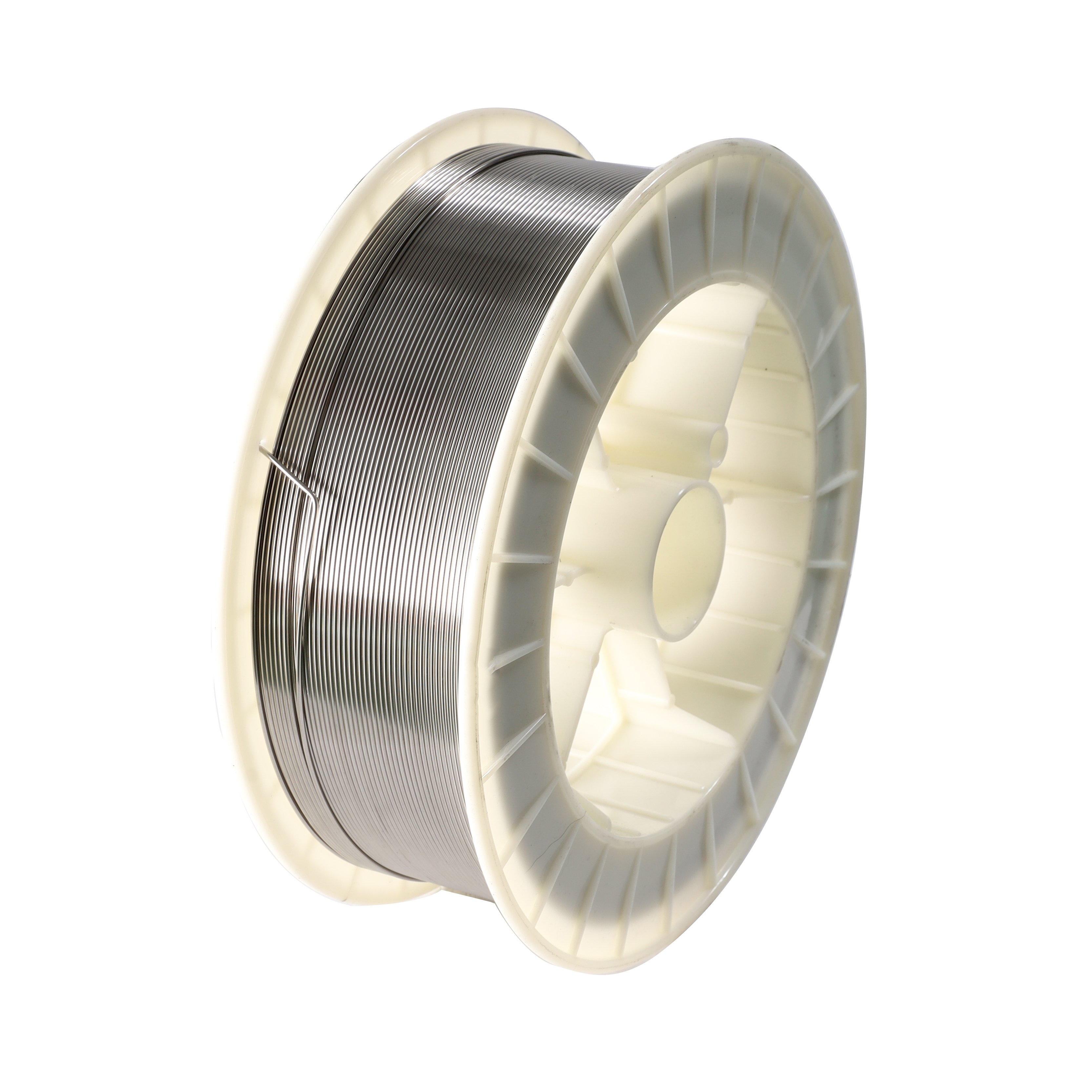
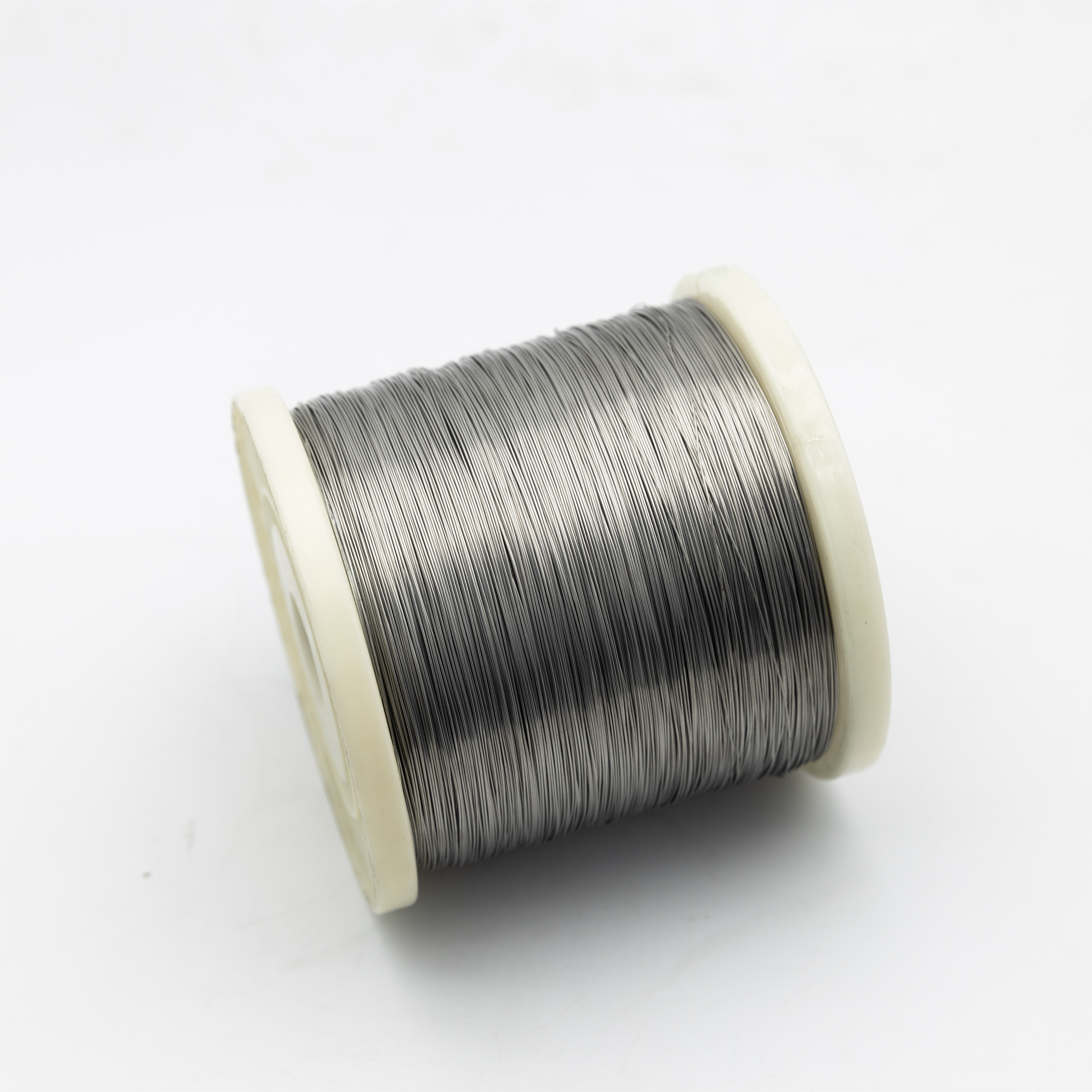
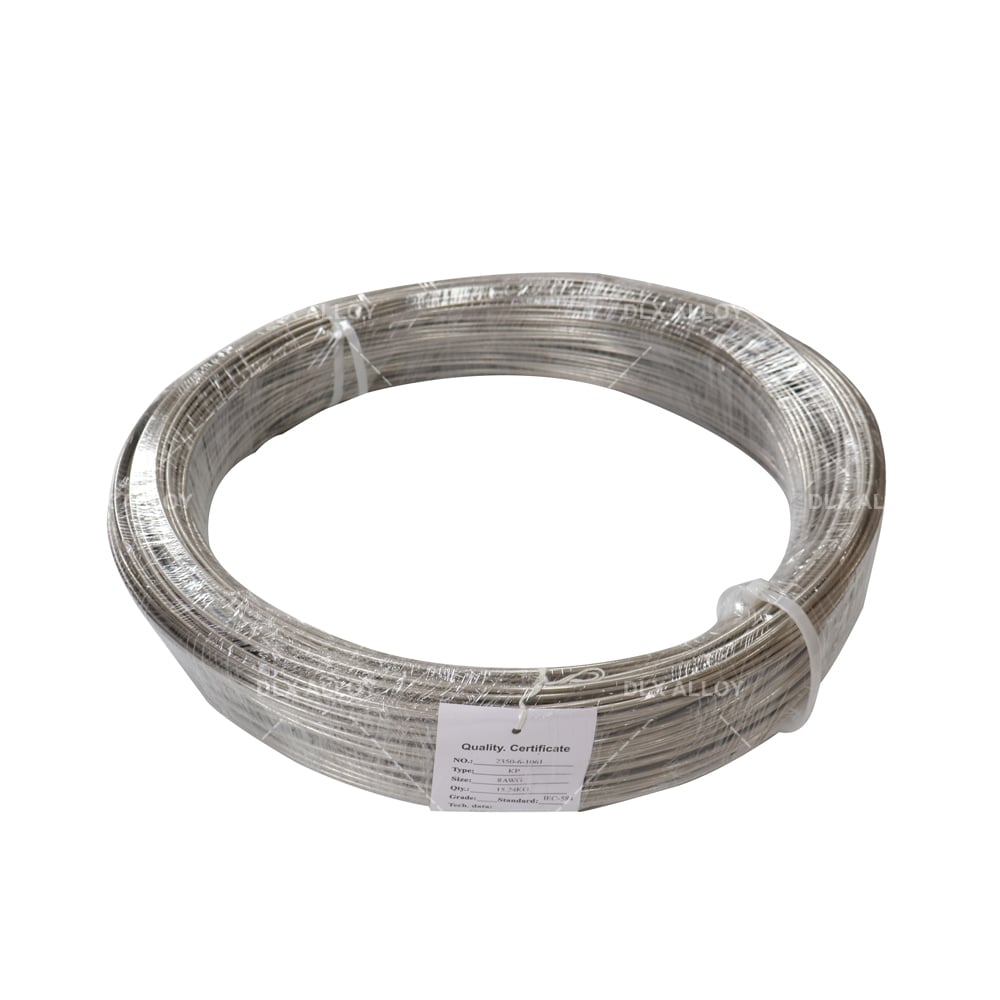
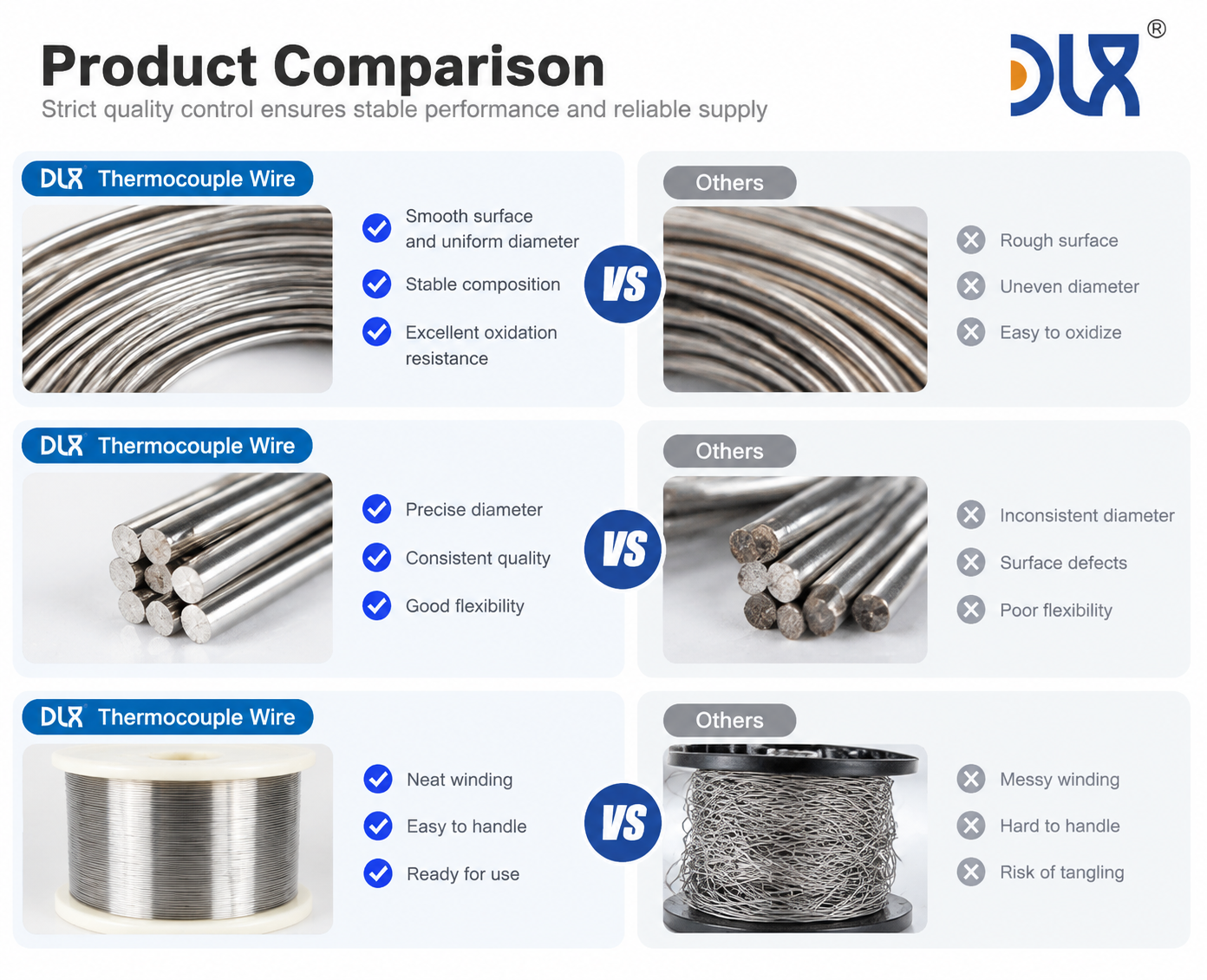
All 0.3mm fine thermocouple wires are wound onto high-rigidity anti-static spools, vacuum-sealed in anti-oxidation barrier foil, and encased in shock-absorbent packaging to ensure immediate, zero-tangle deployment on your production floor.
Product FAQ
Why is Type B thermocouple wire preferred over Type S and Type R for ceramic kilns above 1500°C?
Type B wire incorporates 30% rhodium in the positive leg and 6% rhodium in the negative leg, compared to 10% and 13% rhodium in Type S and R. This higher rhodium content significantly increases the alloy's solidus temperature and mechanical creep resistance, allowing continuous long-term operation up to 1700°C without premature thermal sagging or grain growth.
What are the mechanical advantages of selecting a 0.3mm wire diameter for kiln installations?
A 0.3mm diameter provides the ideal balance between noble metal cost efficiency, mechanical rigidity, and thermal responsiveness. Compared to thinner wires (e.g., 0.2mm), 0.3mm wire offers substantially greater resistance to mechanical vibration and high-temperature sagging, ensuring extended operational longevity inside ceramic protection tubes.
Is cold junction compensation required when using Type B thermocouple wire?
Type B thermocouple pairs generate a nearly flat thermoelectric output between 0°C and 50°C (less than 3 microvolts). Because of this negligible ambient voltage, standard industrial installations operating above 600°C often do not require complex cold-junction compensation or specialized extension wire.
How does DLX prevent wire embrittlement and calibration drift during long-term operation?
Embrittlement and drift are primarily caused by high-temperature grain boundary oxidation and volatile impurity diffusion. DLX utilizes high-purity noble metal raw materials and vacuum degassing to eliminate trace contaminants, ensuring a stable, fine-grained metallurgical matrix throughout thermal cycling.
What packaging and spooling options are available for 0.3mm thermocouple wires?
Wires are precision-wound on DIN standard plastic spools or supplied as pre-cut matched straight lengths. Spools are packaged in sealed moisture-barrier bags with desiccant and housed in reinforced shipping cartons to prevent mechanical deformation during international transit.