EN

High Performance Aluminum Nickel Composite Strip Al/Ni For 32700 LiFePO4 Tabs
Solid-State Metallurgical Clad Metal for Zero-Delamination Transition Welding & Ultra-Low Impedance Battery Connections
- Overview
- Specifications
- Features
- Applications
- Quality
- FAQ
- Recommended Products
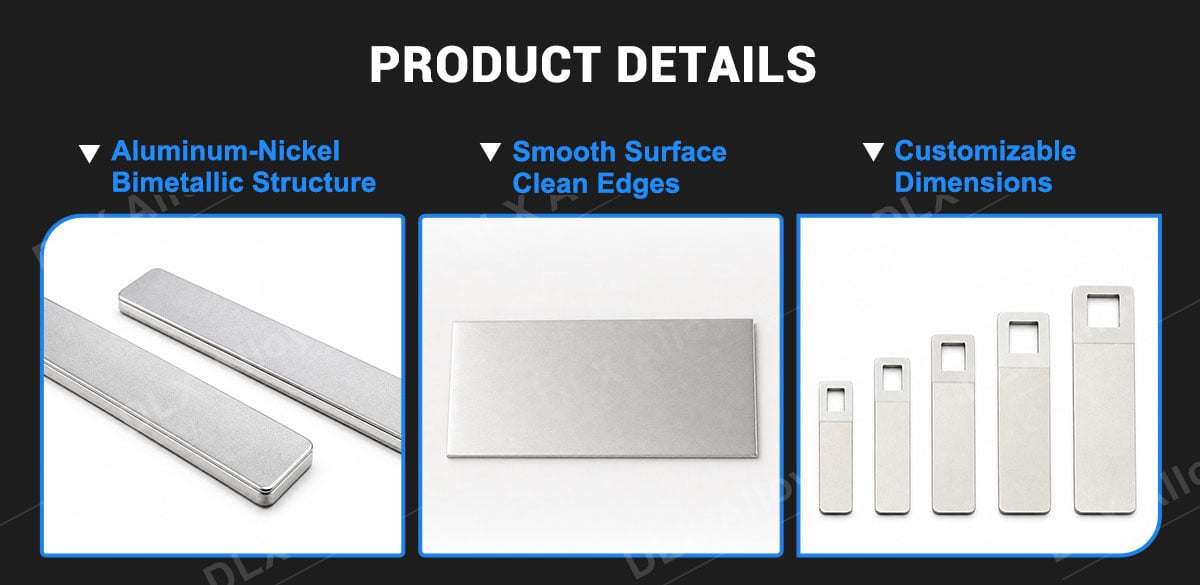
Burr-Free Precision Slitting: Tight width tolerances (±0.05 mm) with burrs eliminate puncture risks to separator films during high-speed automated tab assembly.
High Ductility & Formability: Withstands 180° sharp reverse bending and continuous high-speed stamping without micro-cracking or interfacial delamination.
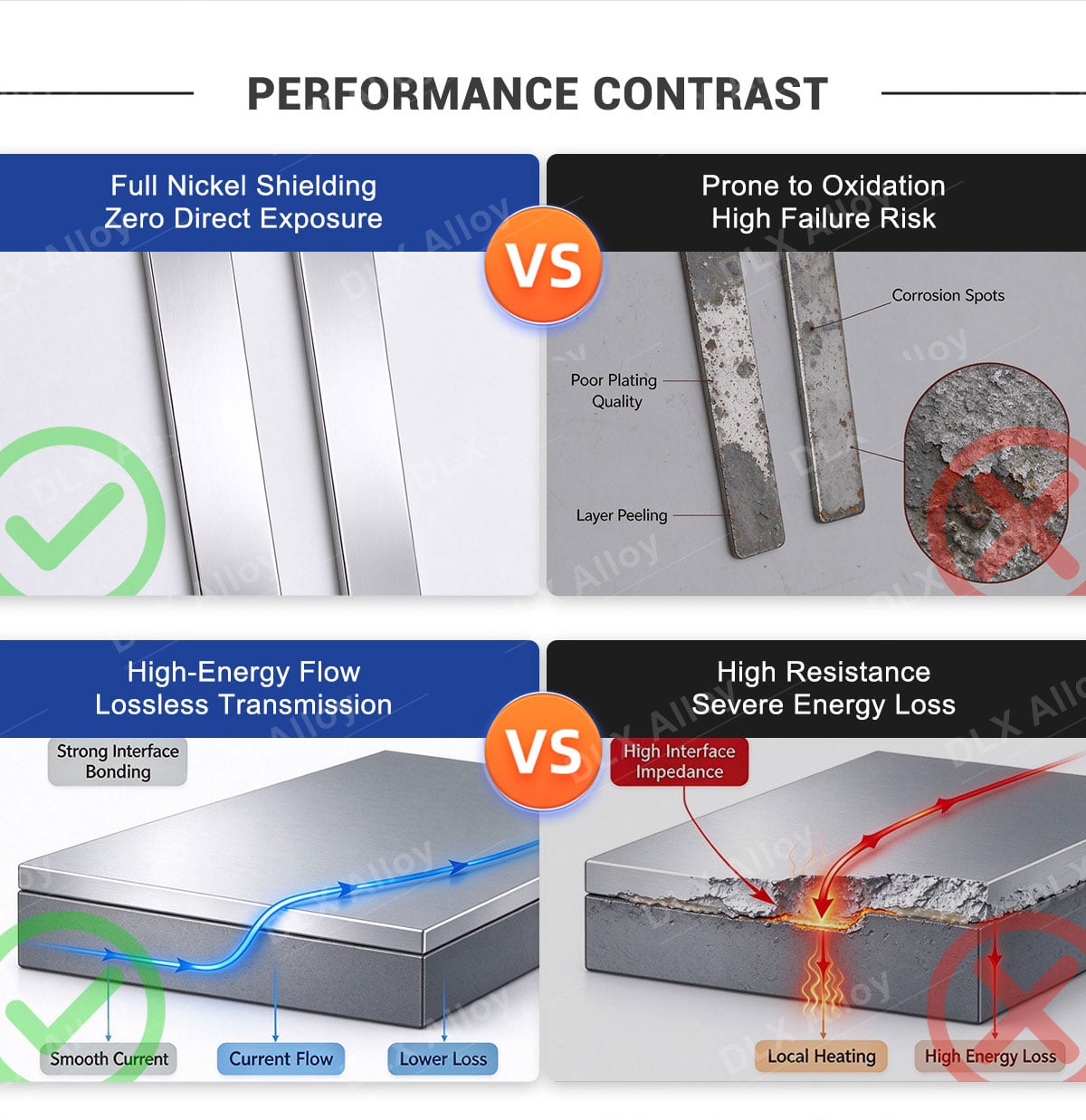
Sealed Joint Corrosion Resistance: The atomic-scale metallurgical interface completely blocks electrolyte seepage and atmospheric moisture, eliminating galvanic corrosion over 10+ year battery lifespans.
Product Overview
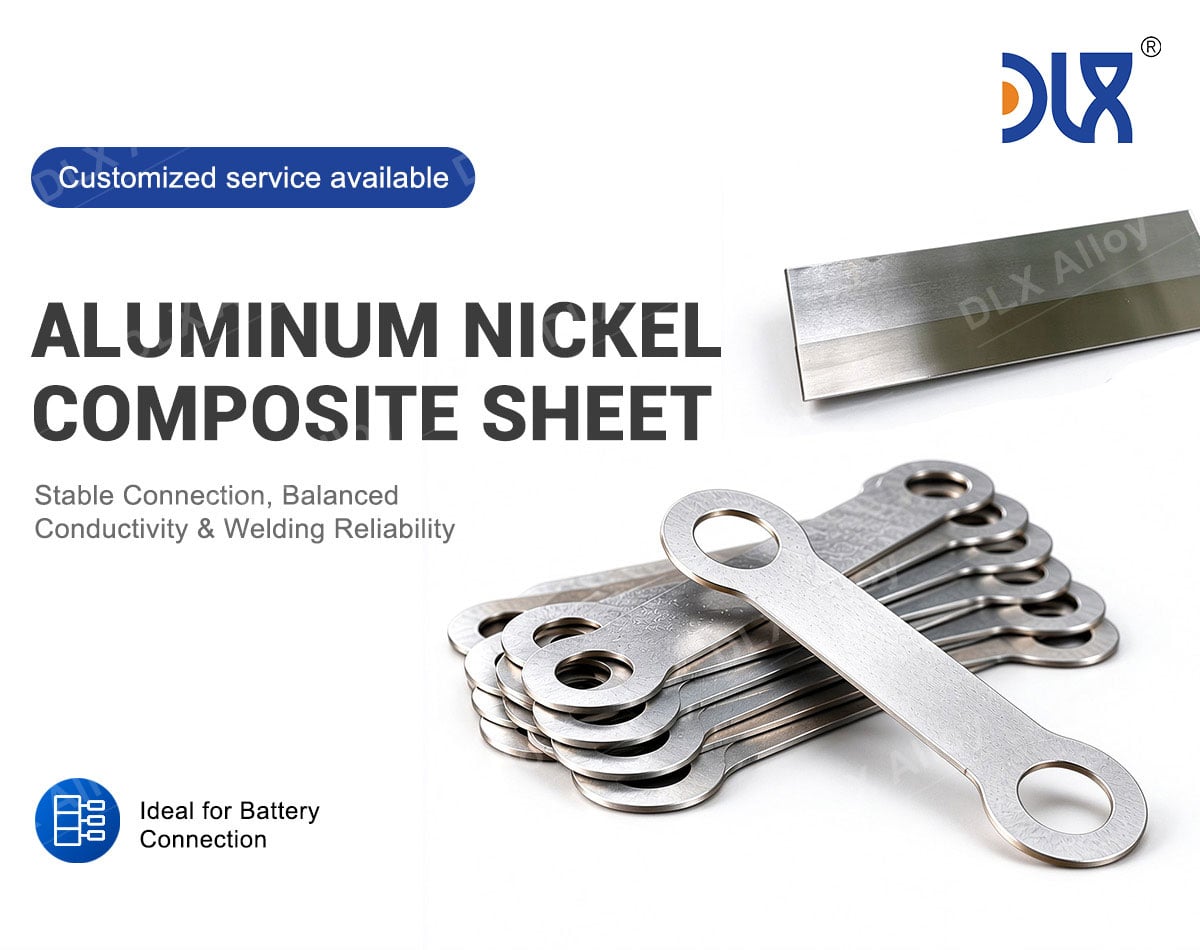
High-performance 32700 LiFePO4 cell assembly demands interconnect materials that eliminate brittle intermetallic phases (such as and ) typically caused by direct fusion welding between aluminum and nickel. Our Al-Ni composite transition strip provides an optimal metallurgical bridge that combines the low density and electrochemical compatibility of aluminum with the superior spot-weldability of nickel.
Through advanced continuous rolling and controlled thermal diffusion bonding, our composite strips achieve atomic-level interfacial integration. This ensures:
Technical Specifications & Physical Properties of Al/Ni Composite Strip
A. Chemical & Layer Ratio Composition
| Layer Component | Base Grade Options | Standard Layer Ratio | Custom Ratio Availability | Quality Control Method |
|---|---|---|---|---|
| Aluminum Layer (Al) | Pure Al (1060 / 1050 / 3003) | 50% (1:1) or 66.7% (2:1) | 20% – 80% Tailored | Spectrometric Analysis |
| Nickel Layer (Ni) | Pure Nickel (N6 / Ni200 / Ni201) | 50% (1:1) or 33.3% (1:2) | 20% – 80% Tailored | Spectrometric Analysis |
| Bonding Interface | Solid-state diffusion layer | Micro-thickness | Zero Intermetallic Phase | Metallographic Cross-Section |
B. Physical & Electrical Performance
| Property Parameter | Metric Value / Unit | Technical Notes |
|---|---|---|
| Aluminum Layer Conductivity | High electrical conductivity, low heat generation | |
| Nickel Layer Conductivity | Stable electrical transmission & spot weldability | |
| Bonding / Peel Strength | Base metal tears before interface separates | |
| Interface Contact Resistance | Near-zero micro-ohm () | Eliminates mechanical contact resistance |
| Continuous Operating Temp | Fully compatible with automotive/ESS battery cycles |
C. Mechanical Properties & Dimensional Capabilities
| Parameter | Standard Delivery State | Custom Capability | Inspection Method |
|---|---|---|---|
| Total Thickness | 0.15 mm – 0.40 mm | 0.10 mm – 1.00 mm | Micrometer () |
| Width Range | 3.0 mm – 50.0 mm | Up to 120 mm custom coil | Optical Comparator () |
| Tensile Strength () | 120 – 210 MPa | Annealed (M) / Hard (Y) | Mechanical Tensile Tester |
| Elongation at Break () | Customizable stamping temper | Ductility Bench Test | |
| Edge Burr Level | Burr-free precision slit | Optical Microscope 100x | |
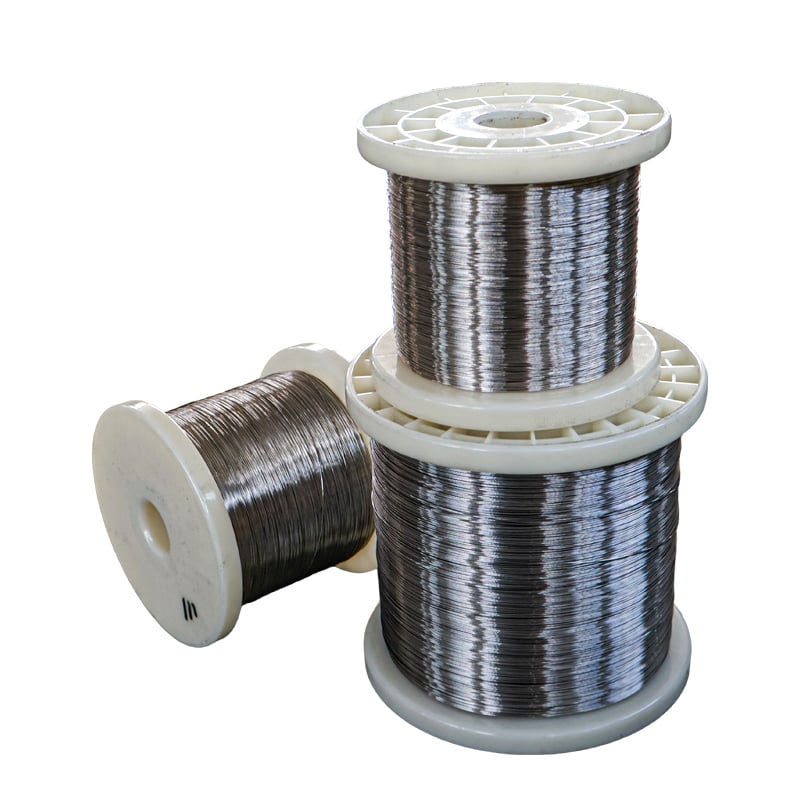
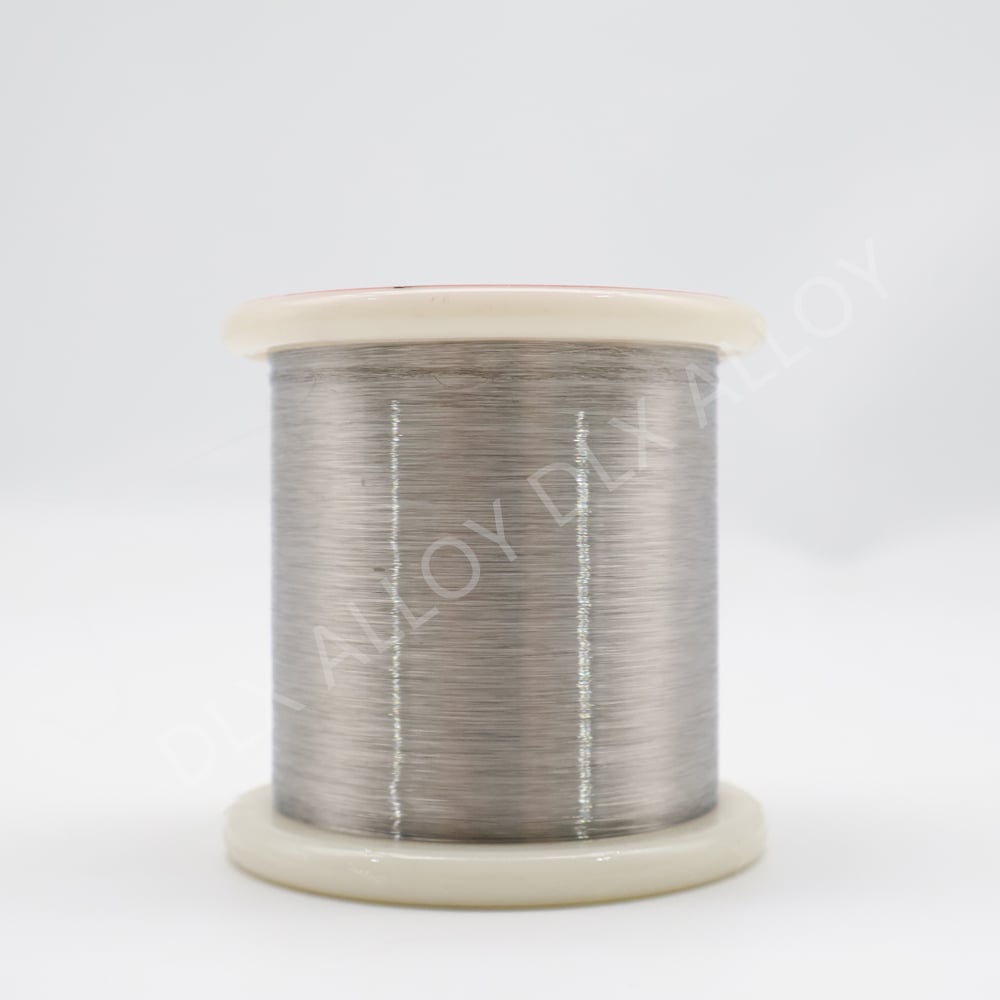
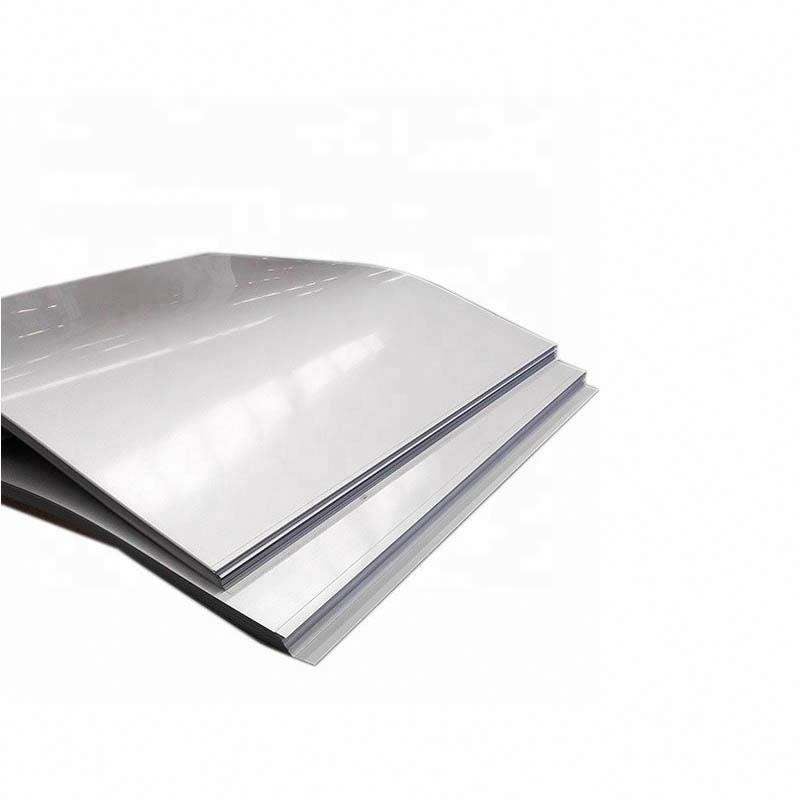
| Delivery Forms | Spool wound, Continuous coil, Level cut strips, Stamped tabs (2P/3P/4P) |
Key Engineering Features of Al-Ni Clad Metal in 32700 Tab Welding
-
1. Zero Delamination Metallurgical Bond Continuous rolling and thermal diffusion create an atomic-level interface, ensuring zero delamination during severe 180° bending, multi-axis forming, and automated high-speed tab stamping.
-
2. Superior Laser & Ultrasonic Weldability Allows the aluminum layer to be welded directly to the aluminum cell case/positive terminal, and the nickel layer to be spot-welded or laser-welded to the nickel busbar or BMS terminal, preventing brittle Al-Ni intermetallic phase formation.
-
3. Ultra-Low Internal Contact Resistance Eliminates mechanical joint resistance, significantly reducing heat buildup and energy loss under high-current 3C–5C rapid discharge cycles in 32700 energy storage packs.
-
4. Galvanic Corrosion-Resistant Interface The metallurgically sealed joint blocks electrolyte seepage and atmospheric moisture, effectively suppressing galvanic contact corrosion over 10+ year battery lifespans.
-
5. Burr-Free Precision Slitting Tight slitting tolerances ( width) prevent puncture risks to battery separator films during automated high-speed cell assembly.
Industrial Applications: Al-Ni Composite Strip Across Energy Storage & Power Modules
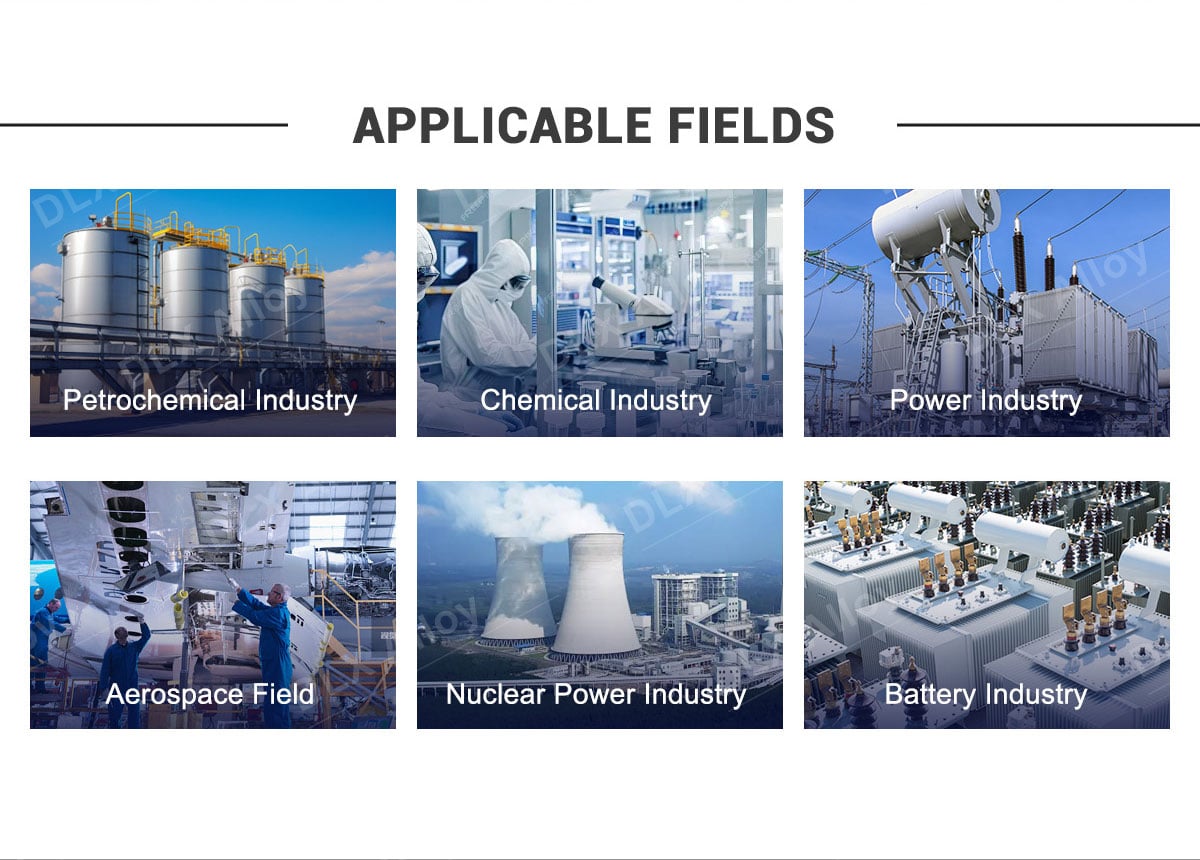
1. 32700 LiFePO4 Cylindrical Energy Storage Cells
- Positive terminal transition tabs for residential energy storage systems (ESS), telecom backup power, and solar street lighting battery packs.
2. High-Rate 21700 & 18650 Power Cell Modules
- Transition connection tabs for electric two-wheelers, cordless power tools, and high-drain portable power stations.
3. Prismatic & Pouch Cell Terminal Connections
- Transition bridge strips connecting aluminum casing terminals with nickel-plated copper busbars and BMS modules.
4. Custom Stamped Tab Arrays & Battery Busbars
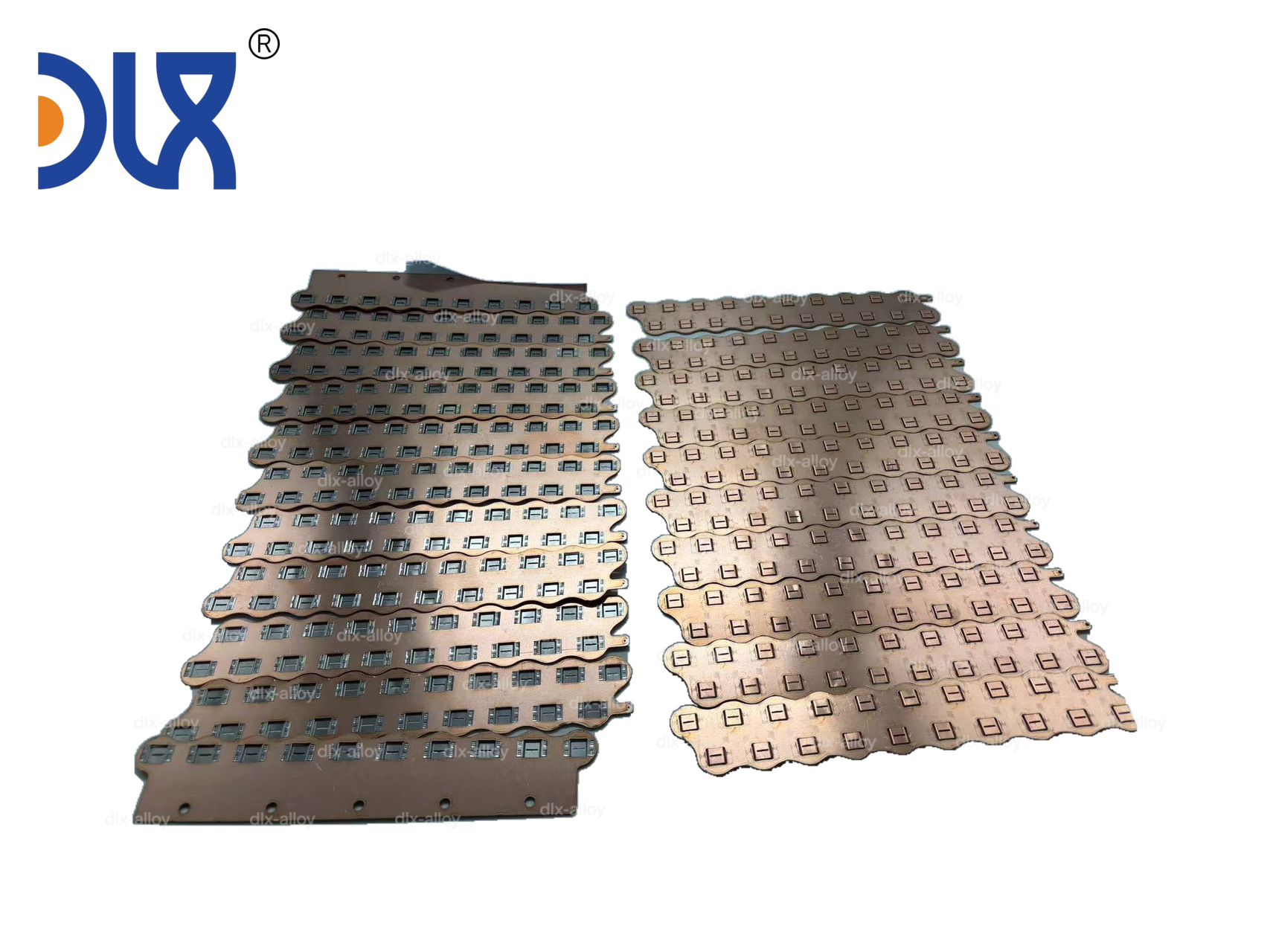
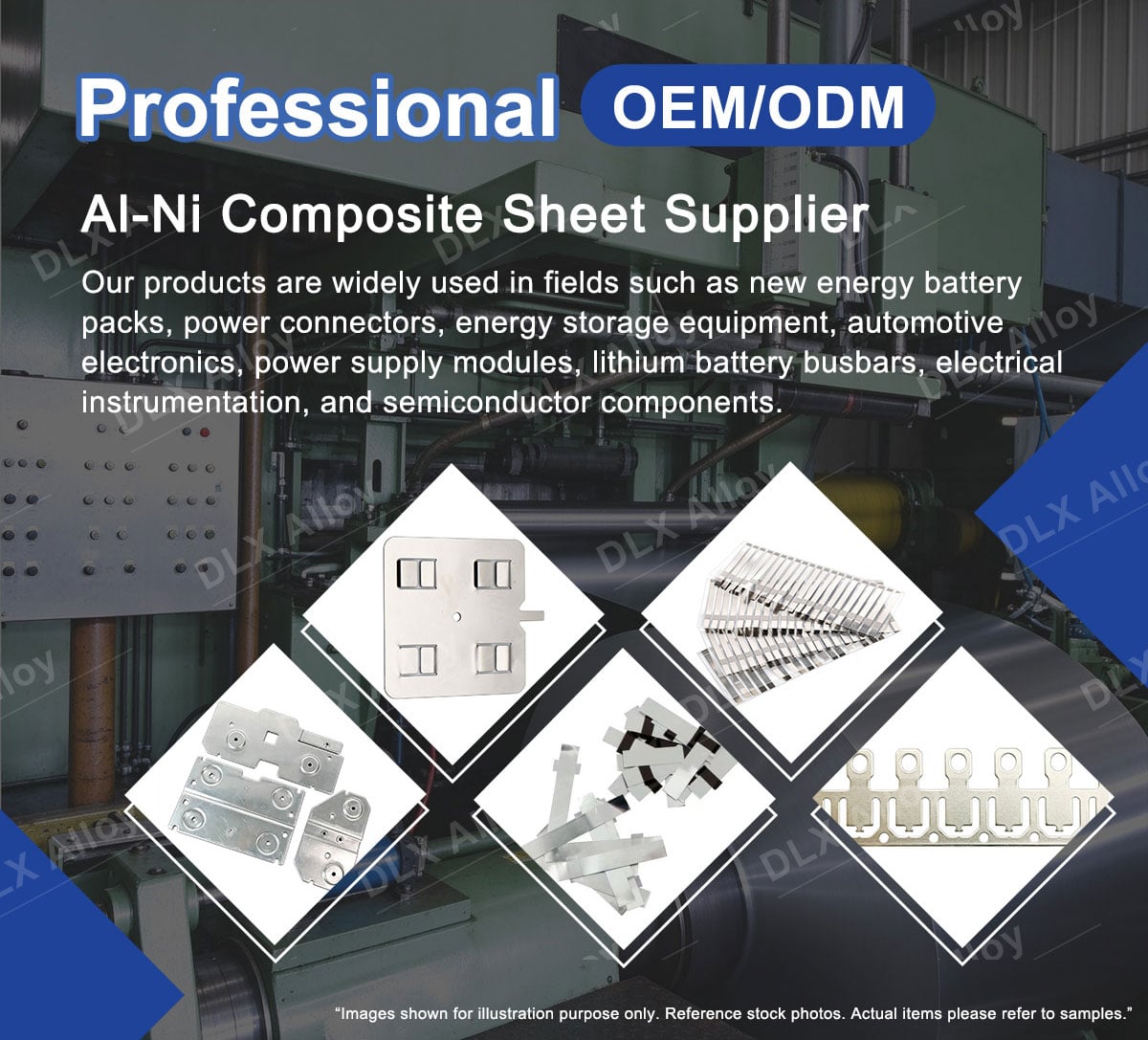
- Pre-formed, stepped, and multi-parallel Al/Ni bimetal connectors for automated wire-bonding and laser-welding battery pack lines.
Quality Assurance, Custom Slitting, and Global B2B Supply
-
Custom Slitting & Stamping Service: We offer continuous reel packaging, traversing spools, and custom-stamped Al-Ni bridge tabs manufactured strictly to your CAD / technical drawings.
-
Rigorous Quality Management (ISO 9001 Certified): 100% batch traceability with Mill Test Certificate (MTC) according to EN 10204 3.1. Spectrometer chemical analysis, metallographic peel strength testing, micro-resistance verification, and laser micrometer inspection for every master coil.
-
Factory Direct Capacity: 1,200 metric tons monthly production capacity with stable, scalable lead times.
-
MOQ & Packaging:
-
MOQ: 5 kg for standard stock specifications; custom width slitting supported.
-
Free Testing Sample: 0.5 kg – 1.0 kg sample available for automated welding qualification.
-
Export Packing: Degreased and edge-finished, packed with desiccant in sealed antistatic vacuum barrier foil bags, and secured in export-grade reinforced wooden cases.
-

Frequently Asked Questions: Al-Ni Composite Strip vs. Alternative Battery Connectors
Q1: Why is an Al-Ni composite strip required for 32700 LiFePO4 battery tabs instead of pure nickel or pure aluminum?
Answer: Direct fusion welding between pure aluminum tabs and pure nickel busbars creates brittle Al-Ni intermetallic compounds (such as and ) and high electrical resistance, leading to weld fracture and overheating. The Al-Ni composite strip provides a pre-bonded metallurgical transition: aluminum welds to aluminum (positive terminal) and nickel welds to nickel/copper busbars, ensuring high mechanical strength and ultra-low resistance.
Q2: What custom widths and thickness ratios can DLX provide for 32700 cells?
Answer: We provide total thicknesses from 0.15 mm to 0.40 mm, with common widths such as 4.0 mm, 6.0 mm, 8.0 mm, 10.0 mm, and 12.0 mm tailored to 32700 tab dies. Thickness ratios are fully customizable (e.g., 50% Al / 50% Ni, or 60% Al / 40% Ni) according to your spot welding or laser welding parameter requirements.
Q3: How do you guarantee zero delamination during stamping and bending?
Answer: Every production batch undergoes a 180° reverse-bend test and micrographic cross-section inspection. The metallurgical bonding strength exceeds the shear strength of the aluminum base metal (), ensuring the material can undergo severe bending, punching, and forming without layer separation.
Q4: What is the lead time and MOQ for sample evaluation?
Answer: We maintain ready inventory of standard Al-Ni master coils. Sample slit coils (5–10 kg) can be prepared and dispatched within 3–5 working days for customer welding qualification. Standard production orders are delivered in 10–15 days.
Q5: How is the composite strip packaged to prevent oxidation during sea/air transit?
Answer: All strips are degreased, edge-finished, packed with desiccant in sealed antistatic vacuum barrier foil bags, and secured in export-grade reinforced wooden cases to guarantee zero oxidation and perfect weldability upon arrival.